Copper, Steel and Stainless Steel in Terminal Blocks: How to Choose Metals and Plating for Humid and Salt-Spray Environments (2026)
A terminal block uses three metals for three jobs: a copper alloy carries the current, steel or brass provides the clamping force, and stainless steel forms the spring in push-in and spring-cage designs. For dry indoor cabinets, tin-plated copper alloy with zinc-plated steel clamps is normally adequate. For coastal, marine or outdoor humid sites, check three things for each series: the contact plating, the corrosion protection of the clamping parts, and documented salt-spray evidence with a stated method — not just the name of a plating.
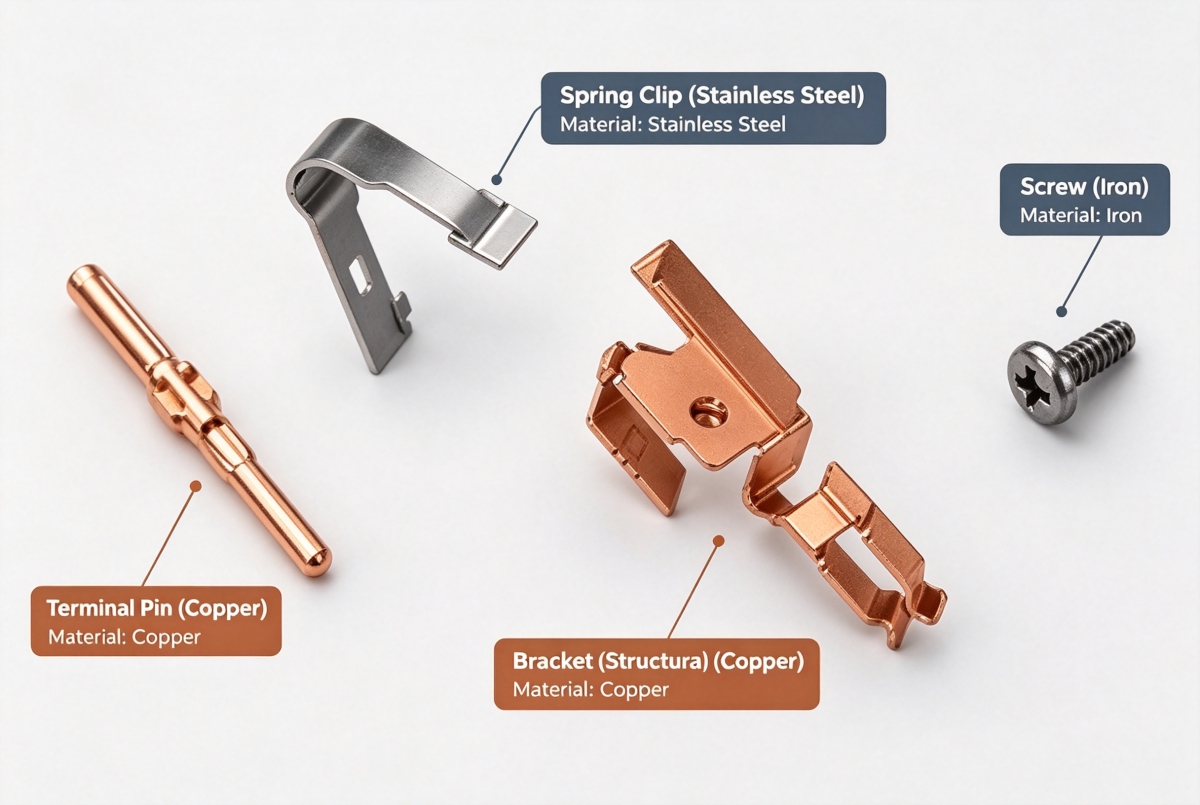
Map Each Metal to Its Job in the Terminal
Selection discussions usually focus on housing flammability, rated current and wiring speed. Long-term reliability in a humid or salt-laden cabinet depends more on the metal parts, and each metal fails in its own way:
The point of the map is simple: a terminal can pass its electrical type tests under IEC 60947-7-1 and still degrade in the field if any of these three parts is not matched to the environment. That standard does not assign a salt-spray rating to the product, so corrosion evidence has to be requested separately.
Choose the Copper Alloy and Contact Plating by Environment
The current path must be copper-based. Brass (CuZn) machines well at moderate cost and is the usual choice for DIN rail and PCB terminal current bars. Phosphor bronze has better spring properties and appears in contacts that are mated repeatedly. Pure copper offers the highest conductivity where shape allows.
Bare copper alloys oxidize in air, and humidity, sulfur compounds and chlorides accelerate this. The plating decides where the terminal can be used:
- Tin: the default for power and indoor control wiring. Its thin oxide breaks under contact force, so a low-resistance metal contact forms. Its weak point is fretting corrosion: under vibration or thermal cycling, micro-motion keeps exposing and oxidizing fresh tin, and contact resistance creeps up.
- Nickel: harder and more corrosion-resistant, but higher in contact resistance. It is mostly used as an underlayer that stops copper diffusing into the top layer.
- Gold (usually selective): chemically stable, suited to low-current signal contacts, frequent mating and humid air. Plating only the contact zone keeps cost under control.
DEGSON's pluggable PCB terminals show both approaches on official product pages. The 2EDGK-5.08 plug (20 A, 320 V III/2, IEC 61984/UL 1059) uses a copper alloy contact tin-plated at both the wire connection point and the contact area. The 15EDGKNH-2.54 signal plug keeps tin at the wire connection point but gold-plates the contact area — a selective-gold design for signal circuits.
Decision rule: tin-plated copper alloy is sufficient for dry, indoor, low-vibration cabinets. For signal contacts in humid or salt-laden air, or for frequent mating, prefer selective gold. For outdoor or marine power circuits, ask for the plating thickness and the corresponding salt-spray evidence for the exact series.
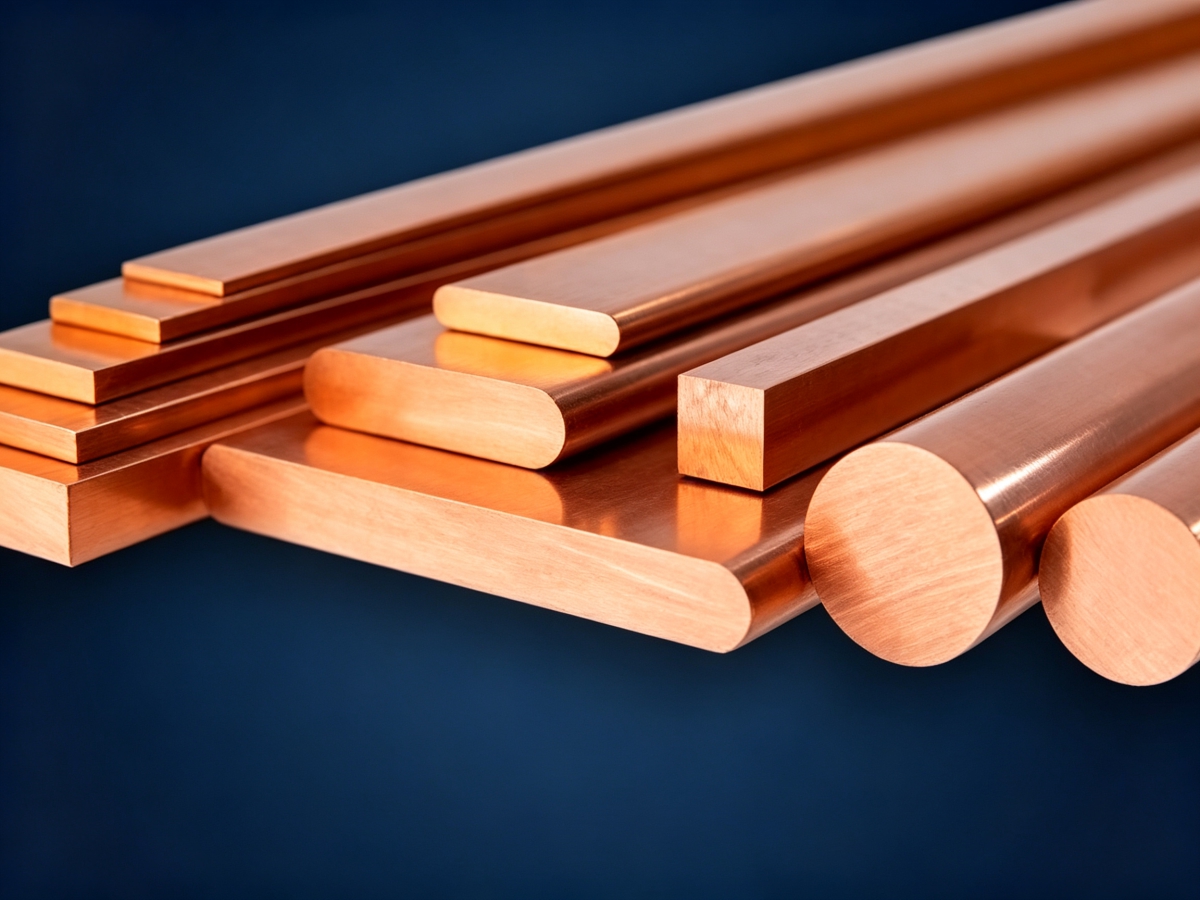
Treat Steel Clamps and Screws as a Corrosion Item
Steel appears in terminal blocks as screws and clamping yokes. It is chosen for strength, not conductivity: it holds thread form under repeated tightening and keeps clamping force under shock. The DEGSON DIN rail terminal catalogue describes its DC series in exactly these terms — "steel screw and steel cage to clamp wire, good torque and shock resistance", with a high-precision copper alloy part carrying the current.
Bare steel rusts quickly, so the result depends on the surface treatment, commonly zinc or zinc-nickel. Corrosion of a poorly protected steel screw is not cosmetic: it reduces the effective thread section, can seize the screw, and makes later re-tightening or replacement impossible.
The less obvious risk is galvanic corrosion. A steel yoke pressed against a copper alloy current bar forms a couple of dissimilar metals. With moisture and dissolved salt as electrolyte, the less noble metal corrodes first — the zinc coating, then the steel. The coating therefore has to protect the steel and withstand the copper interface, which is why the specification of the coating matters more in salt-laden air than in a dry cabinet.
A well-protected steel part can outperform unprotected copper alloy. DEGSON's own DIN rail terminal selection guide ranks corrosion resistance as "DC Steel Screw > Nickel-plated Copper > Standard Copper" and positions the DC series for petrochemical and marine environments.
Decision rule: where vibration, shock, high tightening loads or corrosive atmospheres dominate — ships, offshore, petrochemical plants, rail vehicles, wind turbines — a surface-treated steel clamping system is a sound choice, provided the supplier can state the surface treatment and show test evidence for that series.
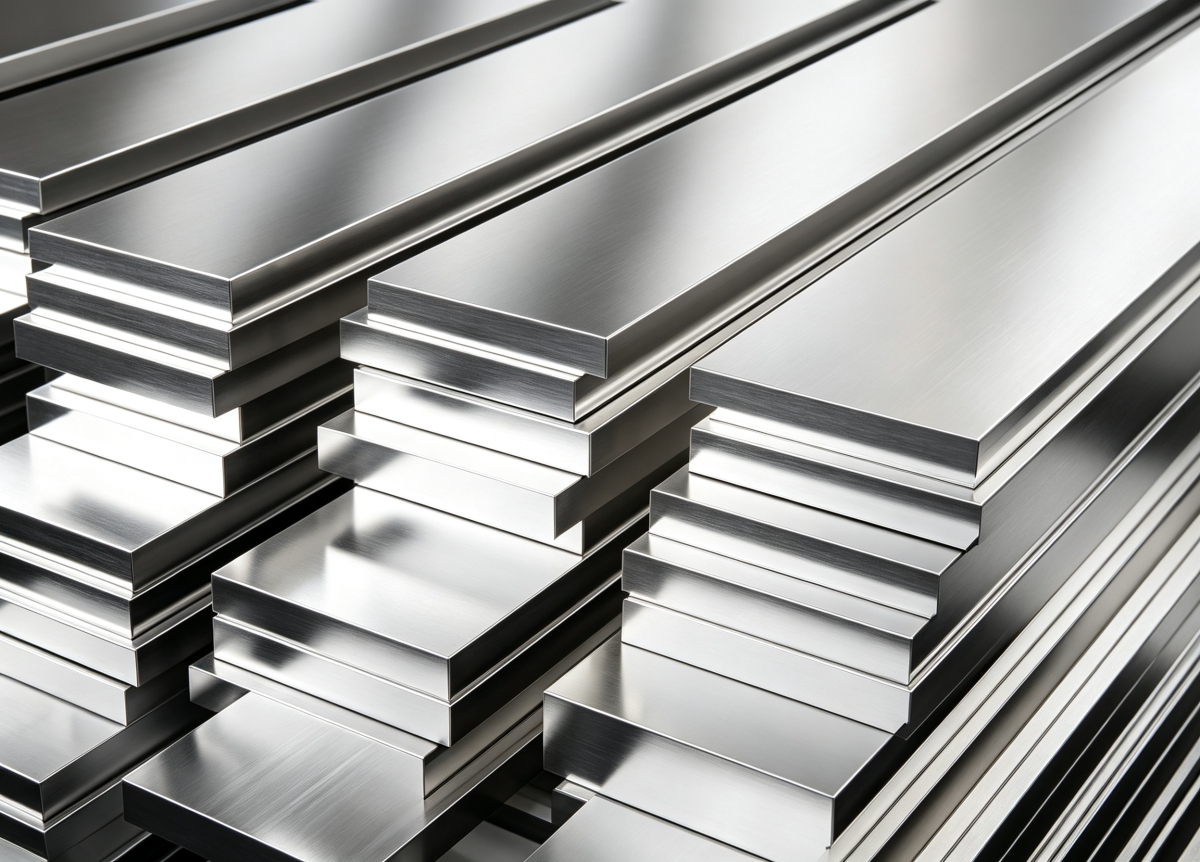
Check the Spring Material in Push-in and Spring-Cage Terminals
In push-in and spring-cage terminals there is no screw to re-tighten. The spring provides the clamping force for the life of the connection. If it corrodes or relaxes, clamping force falls and contact resistance rises, and nobody notices until the joint overheats.
Stainless spring steel is used because it combines corrosion resistance with stable elasticity. DEGSON's catalogue states that both its DS push-in and WS spring-cage DIN rail terminals use imported stainless steel springs. The same catalogue lists the DS series for −40 °C to 105 °C with UL 94 V-0 housings.
Stainless steel is also used for screws and fasteners in some terminals intended for aggressive chemical or marine exposure, where zinc-plated steel would not last. It is not a conductor material in this context; its value is keeping a mechanical function stable.
Decision rule: when comparing push-in or spring-cage terminals for a humid or vibrating site, put spring material and the supplier's vibration test data on the same line as wiring speed and wire range.
Steel or Brass Clamping: What the DC35 vs PC35 Pair Shows
DEGSON makes two screw-type DIN rail series that differ mainly in clamping material. The catalogue describes the DC series as steel screw and steel cage, and the PC series as "brass screw and brass block with clamping wire", with "good corrosion resistance". Comparing the two 35 mm² models isolates the material choice:
Sources: DC35 datasheet, PC35 product page, DNV certificate TAE00004X1.
Three observations follow from the data. First, the electrical ratings are identical, so the choice between them is not a current decision. Second, the steel screw is specified for a higher tightening torque — 3.5 N·m against 2.5 N·m on the same M6 thread — which is the mechanical advantage of steel showing up in the datasheet. Third, the conductor ranges differ: DC35 accepts up to 50 mm² but starts at 2.5 mm², while PC35 reaches 35 mm² and accepts conductors down to 0.2 mm².
On corrosion, both series appear on the same DNV type approval, so marine acceptance alone does not separate them. DEGSON's ranking puts the surface-treated DC steel system ahead of copper-based clamping, while the PC series keeps the whole clamping path in copper alloys, avoiding the steel-to-copper couple altogether.
Decision rule: for marine, offshore or chemically aggressive sites, heavy shock loads, high tightening torque or conductors above 35 mm², DC35 is the closer fit. Where conductors are 35 mm² or smaller, fine conductors down to 0.2 mm² must also be clamped, and the environment is a normal industrial one, PC35 meets the same 125 A rating with an all-copper-alloy clamp.
Ask for Salt-Spray Evidence, Not a Plating Name
"Tin-plated" and "passed a stated salt-spray test" are different claims. Plating method also affects the result: reel-to-reel plating on the strip gives uniform layers on small stamped parts, barrel plating is economical for loose small parts but less uniform, and rack plating suits larger parts that must not collide. A supplier's choice of method says something about process control, but only test data says how a part behaves.
When a supplier quotes corrosion performance, check what stands behind it:
- Method: neutral salt spray to ISO 9227, or cyclic salt mist to IEC 60068-2-52. Hours from different methods are not comparable.
- Scope: which series, which parts (contact, screw, spring) and which plating thickness were tested.
- Pass criterion: visual rust grade, contact resistance change, or clamping function after exposure.
- Marine approval: DNV type approval of electrical equipment uses the environmental test specification DNV-CG-0339, which includes vibration, humidity and salt mist tests. Certificates can be checked through DNV's certificate authentication service.
DEGSON's DIN rail terminal blocks hold DNV type approval certificate TAE00004X1, issued 2024-10-10 and valid until 2029-10-09. It covers the DS, WS, STB, PC, DC and DHV series, lists the tests carried out as IEC 60947-7-1/-2/-3 plus cold, dry heat, damp heat, salt mist, vibration and flame retardancy, and assigns location classes Temperature B, Humidity B and Vibration B. The certificate confirms that the salt mist test was passed for these series; it does not state an hour figure, and DEGSON has not published separate salt-spray hour reports for the DC and PC series.
Salt-spray hours are series-specific even within one manufacturer: DEGSON's official pages list 48 h for its PM-EBS e-bike signal connectors and 72 h for its SA-EBBH battery-swap connectors, and neither figure transfers to DIN rail terminals. If a project specification requires a stated hour rating, include it in the enquiry so the supplier can confirm it against a test for that exact series.
FAQ
Is a brass clamp always better than steel in salt spray?
No. Brass cannot red-rust and avoids the steel-to-copper galvanic couple, but some brasses can dezincify in wet, chloride-rich conditions, while a properly surface-treated steel clamp can perform better. DEGSON, for example, ranks its DC steel-screw series ahead of copper-based clamping for corrosion. Compare test evidence for the exact series rather than base materials alone.
Is standard tin plating acceptable in outdoor PV or wind cabinets?
Often yes for power terminals in a sealed, condensation-controlled enclosure. Where condensation, salt or strong vibration are expected, tin is exposed to fretting and corrosion. Ask for plating thickness and salt-spray evidence, and consider selective gold for signal contacts.
Next step: compare the DC and PC screw-type DIN rail terminals and DS push-in series at degson.com, 内部工具 datasheets and CAD for the exact order numbers, and request the DNV type approval certificate and test documentation for the series you plan to use in humid or marine cabinets.
References
- IEC 60947-7-1: Terminal blocks for copper conductors.
- ISO 9227:2022: Corrosion tests in artificial atmospheres — Salt spray tests.
- IEC 60068-2-52:2017: Environmental testing — Test Kb: Salt mist, cyclic.
- DNV-CG-0339: Environmental test specification for electrical, electronic and programmable equipment and systems.
- DNV Type Approval Certificate TAE00004X1, Terminal Block, DEGSON TECHNOLOGY CO., LTD.


