Common factors affecting the stability of terminal blocks
Terminal blocks may appear structurally simple, yet they serve as critical nodes in electrical systems for energy transmission and signal connection. Nearly all control cabinets, automation equipment, industrial control devices, and various power electronic devices rely on terminal blocks. Though compact in size, they directly impact the safety and stability of the entire system. A failure in terminal connection can lead to minor issues such as poor contact, abnormal heating, or signal drift, or severe consequences like equipment shutdown, production interruption, and even serious accidents like arcing, short circuits, and fires. Many on-site electrical failures ultimately trace back to unreliable terminal connections. Therefore, analyzing common factors affecting terminal block stability is crucial for equipment selection, installation, and post-operation maintenance. Overall, factors influencing terminal block stability primarily concentrate on mechanical assembly, environmental conditions, material processes, electrical parameters, and selection usage.
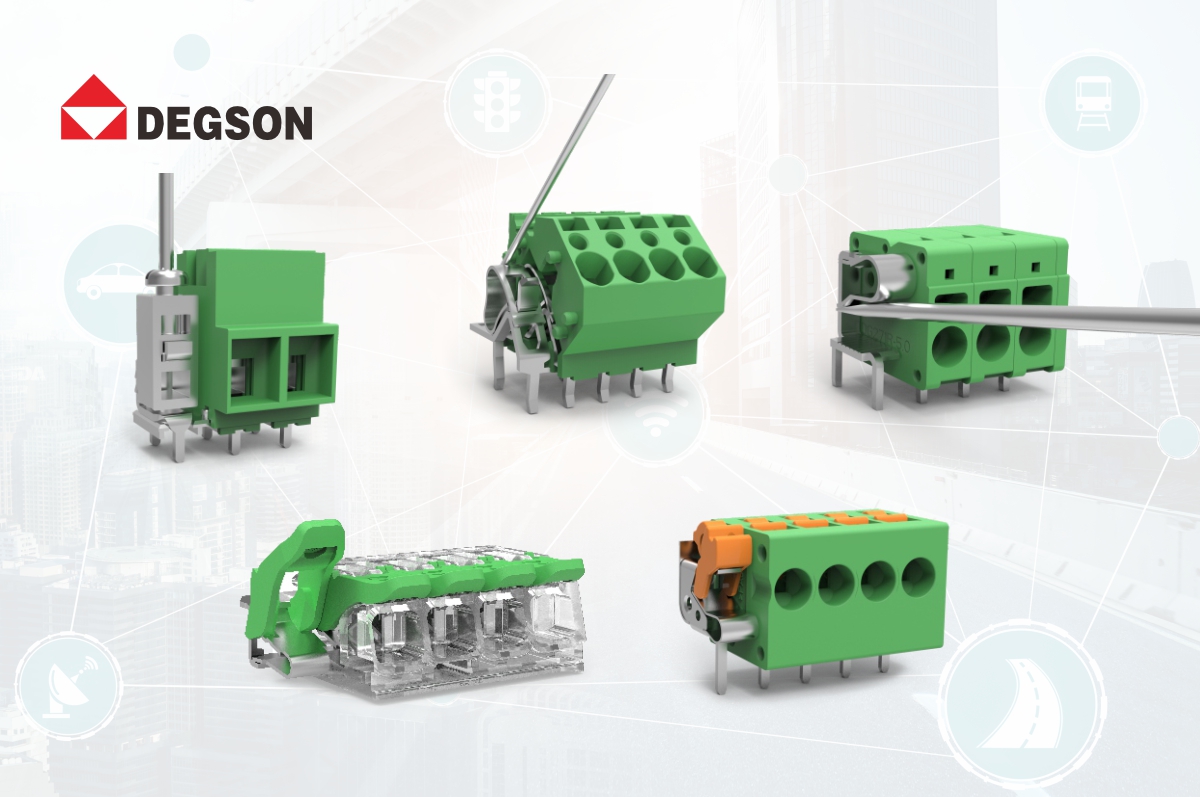
DEGSON has made targeted designs around the above risk points, reducing the probability of failure from product structure, materials, performance, and supporting systems, and improving long-term operational stability
First, mechanical assembly factors are the most direct and common causes affecting terminal stability. The essence of terminal connection is to form a stable and tight contact between the conductor and the conductive body through structures such as screws, spring clips, and crimp terminals. If the assembly torque is too small, the crimping of the conductor will be insufficient, leading to increased contact resistance, and vibrations during equipment operation can easily cause gradual loosening of the connection. Conversely, excessive torque may damage the conductor core or even cause deformation of the terminal housing and thread stripping, leaving long-term hidden risks. Additionally, mismatched wire diameter and terminal specifications can result in inadequate crimping or insufficient contact area. Prolonged tensile stress on the wire harness and continuous vibration impacts from the equipment can also gradually damage the connection structure. Particularly in vibration-prone environments such as rail transit, construction machinery, and wind turbines, mechanical loosening is often the primary cause of terminal failure.
DEGSON simultaneously arranges multiple connection structures, including screw clamping, pullback springs, and PUSH SNAP direct insertion springs, to adapt to different assembly scenarios.
Screw type terminals are clearly labeled with standard tightening torque, with a steel wire frame structure and stable clamping force to avoid loosening due to insufficient torque and damaging the wire core due to excessive torque;
The pullback spring and direct insertion spring series use high-performance stainless steel spring plates, with long-lasting clamping force and lent resistance to vibration and impact. They are not prone to loose connections under continuous vibration conditions of the equipment.
Spring wire products have dual auditory and visual feedback, and when the wire is connected, a "click" prompt will be issued to reduce assembly personnel's operational errors; The rail buckle structure is sturdy, with strong resistance to tensile stress. It also supports standardized bridging components and marking strips, reducing wiring errors and minimizing stability hazards caused by manual assembly. All products have passed mechanical tests related to tension, fastening, and vibration, meeting the long-term operating requirements of industrial equipment.
Secondly, environmental conditions have a significant impact on the lifespan of terminals. High temperature will accelerate the aging of metal shrapnel, gradually weakening its elasticity, reducing contact pressure, and leading to an increase in contact resistance. Moisture, salt spray, and corrosive gases can cause oxidation and corrosion of metal contacts, forming insulation or high resistance layers that hinder the passage of current. Low temperature environments can easily cause the plastic shell material to become brittle and crack, damaging the insulation and fixing ability of the terminals. Dust, oil stains, and impurities accumulate at the contact location, which can also block the conductive interface and induce intermittent poor contact. For outdoor equipment, chemical facilities, ships, and coastal engineering, environmental factors are often the hidden driving force behind the decrease in terminal stability.
Faced with complex working conditions such as high temperature, low temperature, humidity, and dust, DEGSON terminal insulation housing uses PA66 substrate, with a working temperature range of 40℃~105℃, and the housing is not easily brittle or deformed in a wide temperature range. Standard tin plating treatment is applied to metal conductive parts to enhance their resistance to oxidation and moisture corrosion, and reduce the risk of increased contact resistance in salt spray and high humidity environments. The flame retardant rating of the shell reaches UL94 V0, with dust-proof and anti misoperation design; For high protection demand scenarios, the IP67 protection level series can be selected to adapt to harsh environments such as outdoor, energy storage, and wind power, reducing the problem of poor contact caused by dust and water vapor intrusion. The entire series has passed environmental reliability certifications such as CE and UL, and is suitable for complex environmental scenarios such as industrial control, new energy, and control cabinets
Thirdly, material and craftsmanship quality are the foundation of terminal stability. Insufficient purity of copper conductors and inadequate coating thickness can accelerate oxidation and corrosion; The elasticity of the shrapnel material is poor, and it is prone to fatigue failure after multiple insertions and removals; The shell lacks temperature resistance and flame retardancy, and may deform or even burn when heated. If there are defects in production processes such as stamping, crimping, injection molding, etc., it can also cause insufficient inherent performance of the terminals. For example, issues such as inconsistent crimping height, excessive burrs, and poor coating adhesion will gradually be exposed during long-term operation. Therefore, choosing terminal products from legitimate brands, qualified materials, and mature processes is a prerequisite for ensuring stability.
DEGSON conductor uses high-purity copper alloy substrate with lent conductivity; The thickness of the contact coating is controlled to avoid the problem of rapid oxidation failure due to thin coating. The spring components are made of imported stainless steel material, which has lent resilience and is not prone to fatigue attenuation of spring fragments after multiple insertions and removals. The clamping force attenuation is small after long-term use. Strictly control the insulation plastic raw materials to eliminate the hidden dangers of shell cracking and thermal deformation caused by recycled materials. The entire process of stamping, electroplating, and injection molding is standardized in production, and voltage drop, temperature rise, and other tests are carried out before leaving the factory. The voltage drop index is well controlled, avoiding inherent faults caused by process defects from the source. The product meets RoHS and REACH environmental regulations.
Fourthly, the electrical working conditions cannot be ignored. Long term overload operation will cause the terminals to continue heating up, further increasing the contact resistance and forming a vicious cycle of mutual promotion between heating and oxidation. Instantaneous high current impact can easily burn the contact surface, causing local melting and increasing roughness. Different AC and DC working scenarios also have different requirements for the current carrying capacity, arc extinguishing capacity, and insulation performance of the terminals. If these differences are ignored, the terminal may appear normal in the short term, but long-term operation will accelerate deterioration.
The DEGSON terminal has a complete parameter matrix and can achieve electrical specifications of up to 1000V and 76A. The temperature rise test is strictly controlled, and the operating temperature rise index is ≤ 45K, avoiding the vicious cycle of "heating resistance increase" caused by continuous heating. Optimized conductive circuit structure, low contact resistance, capable of withstanding certain instantaneous surge impacts; The connection structures of screws and springs are optimized for arc extinguishing and current carrying, taking into account both AC and DC working conditions. The product is strictly calibrated according to IEC60947 and UL1059 standards for rated voltage and current, and the parameters are not falsely labeled to prevent the risk of terminal burnout and damage caused by overload use. Some models reserve test holes, which can easily detect the electrical status of the circuit during the operation and maintenance phase, and promptly identify any abnormal heating hazards.
Finally, selection and usage errors are often the root cause of human induced failures. Neglecting the selection of rated voltage and current parameters blindly, mixing pins and sockets, directly crimping multi strand wires without using cold pressed terminals, and lacking regular inspection and maintenance will all reduce the reliability of terminal operation. Therefore, only by starting from the entire process of selection, installation, environment, and maintenance can we fundamentally improve the long-term stability of wiring terminals, reduce electrical faults and safety hazards.
DEGSON has a full range of product matrices: rail terminals, PCB plug-in terminals, fence terminals, through wall terminals, etc., covering a wide wire cross-section of 0.1450mm², with complete spacing specifications, able to match the wire diameter, voltage and current requirements of the vast majority of equipment, reducing selection and mismatch problems. Standardized matching of accessories such as bridging parts, marking strips, release buttons, etc. for products in the same series, and it is not recommended to mix accessories across series; The product manual clearly indicates the stripping length, torque, and compatible wire type, and reminds that multi strand flexible wires should be used with cold pressed ends first to reduce misunderstandings during on-site use. At the same time, we provide selection technical support to assist engineers in selecting the right model based on working conditions, reducing stability risks caused by selection errors.
Although the terminal block is just a small component in electrical equipment, it plays a crucial role in transmitting electrical energy and connecting signals. Its stable operation is never a one-time solution based solely on the quality of the product itself, but rather the result of the combined effects of product quality, selection and matching, standardized assembly, adaptation to working conditions, and regular operation and maintenance.
No matter how good the terminal product is, if the selection parameters do not match the on-site working conditions, the assembly operation is not carried out according to standards, or it is exposed to harsh environments such as high temperature, salt spray, and strong vibration for a long time, and lacks necessary daily inspections, various faults such as loosening, oxidation, and heating will still occur. Many on-site electrical accidents often overlook the subtle hidden dangers at the connection points, and small problems gradually evolve into equipment shutdown or even safety accidents.
DEGSON wiring terminals, through structural design, material control, wide range environmental adaptation, rigorous electrical calibration, and complete selection and matching, effectively resolve five major types of stability risks. However, reliable operation of terminals still requires reasonable selection, standardized assembly, and regular inspections to maximize the long-term safety and stability of electrical connections.


