DEGSON Transformer Terminal Blocks|Industry Analysis & Reliable Connection Solutions for Small Size Transformers
As the core energy-conversion component in electrical equipment, transformers are widely deployed in machine-tools, elevators, medical power supplies, frequency-conversion reactors and other industrial scenarios. Among them, small-size control transformers and isolation transformers undertake critical tasks including voltage conversion, galvanic isolation and safe power supply. The connection quality of transformer coil outgoing wires directly determines the safety, service life and failure rate of complete equipment.
-
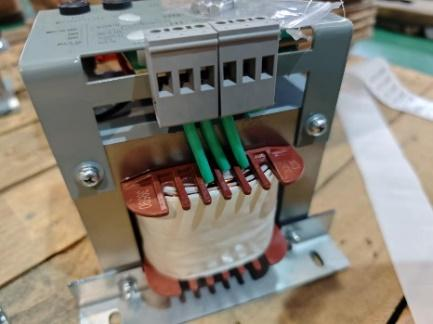
Lead-wire soldering plus general terminal blocks: Enameled wires are drawn out from transformer coils and connected to long external leads, which are further terminated onto standard DIN-rail terminals. This process involves multiple manual soldering and wire-arrangement steps and occupies substantial internal space within the transformer housing. Under long-term vibration conditions, there are high risks of solder joint cracking and lead-wire fracture.
-
Direct tab-outlet connection: Metal tabs are directly welded onto coils, with external conductors clamped via nuts. Assembly is cumbersome; inconsistent manual tightening frequently causes poor contact and overheating. Its limited protection performance also prevents high-volume automated production.
-
Contradictions in assembly efficiency For mass production of complete transformers, traditional lead-wire soldering heavily relies on manual labour. Welding quality varies by operator skill level, which makes adaptation to automated production lines difficult and drives up production costs and defect rates.
-
Connection reliability under vibrating operating conditions Machine-tools, elevators, frequency-conversion reactors and other devices generate continuous vibration during operation. Conventional lead-wires and tab connections may suffer cracked solder joints or loosened screws after prolonged vibration, resulting in poor contact and overheating, and even unexpected equipment shutdown in severe cases.
-
Global export compliance pressure For equipment exported to Europe and North America, transformer wiring components must satisfy UL and VDE safety requirements. Homemade tabs or non-certified terminals cannot meet the compliance criteria for whole-unit certification and will block overseas market access.
-
Space constraints and safety-protection requirements Internal space inside compact small-size transformers is limited; conventional wire harnesses take up valuable space. Special-sector applications such as medical systems additionally demand high flame retardancy and corrosion resistance for components, which ordinary wiring accessories can hardly achieve simultaneously.
The market urgently calls for dedicated transformer terminal blocks that can be mounted directly onto transformer bobbins while balancing assembly efficiency, anti-vibration reliability and international safety approvals. This demand has given rise to purpose-built transformer terminal blocks.
Targeting existing industry pain points, DEGSON has developed a dedicated series of transformer terminal blocks tailor-made for small-size transformers. Transformer coil leads are soldered to the inner side of terminals; terminal bodies are fixed directly onto transformer bobbins via snap-on or hook-on structures, and external conductors are secured with screw clamping. Intermediate lead-wires are eliminated to reduce transition points. The product range covers conductor cross-sections from 2.5 mm² to 10 mm² (AWG 14–AWG 6). Major models hold UL and VDE international safety certifications, fundamentally resolving challenges related to assembly, vibration resistance and compliance — and delivering innovative, reliable, safe and stable electrical connections.
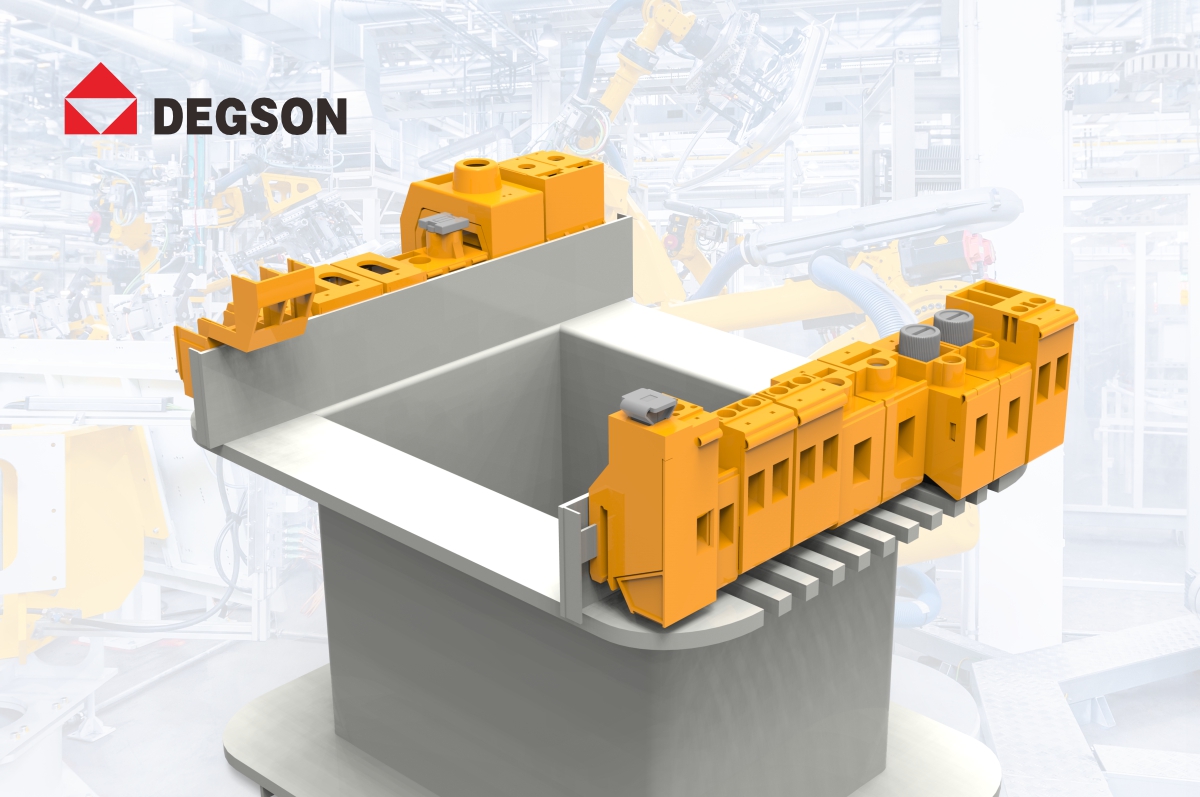
DEGSON transformer terminal blocks are divided into four sub-series: TS basic series, TSB series, TSC series and TSCB/K series, covering 0.2–10 mm² conductors. Selected variants integrate fuse functions to accommodate different mounting structures, voltage and current operating conditions.
| Series | Model | Conductor Range | IEC Rating | UL Rating | Special Features |
|---|---|---|---|---|---|
| TS (Snap-on Mount) | TS2.5 | 0.5–2.5 mm² | 750V / 32A | 300V / 20A | Screw connection, marker strip support |
| TS (Snap-on Mount) | TS4 | 0.75–4.0 mm² | 250V / 32A | 600V / 20A | Screw connection, marker strip support |
| TS (Snap-on Mount) | TS10 | 4–10 mm² | 750V / 57A | 300V / 55A | Screw connection, marker strip support |
| TS (Snap-on Mount) | TSF2.5 | 0.5–2.5 mm² | 250V / 6.3A | — | Integrated fuse protection |
| TSB (Snap-on Mount) | TSB2.5 | 0.5–2.5 mm² | 250V / 24A | 600V / 20A | Dual UL+VDE certification |
| TSB (Snap-on Mount) | TSB4 | 0.5–4.0 mm² | 450V / 32A | 600V / 30A | Dual UL+VDE certification |
| TSC (Hook-on Mount) | TSC4 | 0.5–4 mm² | 750V / 32A | — | Copper screw, corrosion-resistant |
| TSC (Hook-on Mount) | TSC6 | 0.6–6 mm² | 750V / 41A | — | Copper screw, corrosion-resistant |
| TSC (Hook-on Mount) | TSC10 | 0.2–10 mm² | 1000V / 57A | 600V / 65A | Copper screw, corrosion-resistant |
| TSC (Hook-on Mount) | TSCF4 | 0.5–4 mm² | 250V / 10A | — | Integrated fuse |
| TSCB/K (Hook-on Mount) | TSCB4 | 0.5–4 mm² | 800V / 32A | 600V / 30A | High-voltage-resistant, UL94-V0 flame-retardant housing |
| TSCB/K (Hook-on Mount) | TSCBF4 | 0.5–4 mm² | 750V / 10A | — | Integrated fuse, UL94-V0 flame-retardant housing |
| TSCB/K (Hook-on Mount) | TSCK4 | 0.2–4 mm² | 800V / 32A | 600V / 30A | High-voltage-resistant, UL94-V0 flame-retardant housing |
-
Two mounting structures: snap-on / hook-on No extra brackets required. Terminals clip directly onto transformer bobbins for streamlined production-line assembly. Locking snap/hook structures enhance anti-vibration performance and mitigate operational loosening risks.
-
Comprehensive international safety certifications Mainstream models are certified to UL, VDE and CE standards. Housings adopt UL94 V0 flame-retardant material and comply with RoHS and REACH environmental directives, facilitating smooth export of complete equipment to European and North-American markets.
-
Screw-clamp connection minimises poor-contact faults High-conductivity copper conductors and tin-plated internal contacts deliver good oxidation and corrosion resistance. External screw clamping secures conductors against vibration and lowers risks of bad contact and overheating.
-
Flexible functional expansion Models with suffix F integrate fuses for on-site circuit overcurrent protection for transformer loops. Marker strips and multi-colour housings help differentiate functional circuits; custom marking services are available for anti-mis-insertion purposes.
-
Broad specification coverage Suitable conductor range spans 0.2–10 mm², covering low-power control transformers through high-power isolation transformers and reactors.
Snap-on mounting saves internal transformer space; marker strips are supported. Withstands vibration and oily workshop conditions. Screw-clamp connections deliver stable performance and are widely used for CNC machine-tool control transformers.
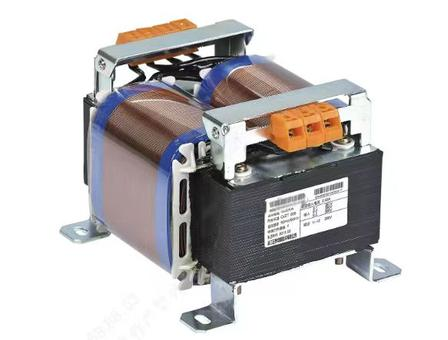
Hook-on mounting; high-conductivity corrosion-resistant copper screws. Anti-mis-assembly design with multi-colour housings to distinguish functional circuits. Tolerates continuous vibration generated during elevator operation and safeguards electrical-system safety.
UL94 V0 flame-retardant housing with robust corrosion-resistant construction. Meets stringent safety criteria for medical isolated power supplies and is widely deployed in IT isolated power-supply transformers for operating-room applications.
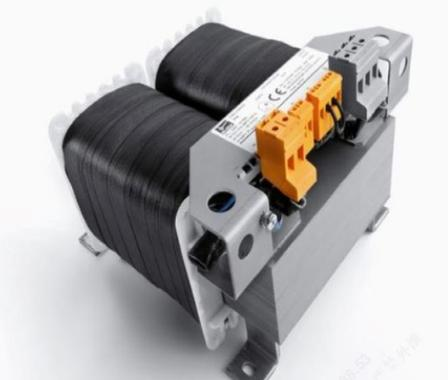
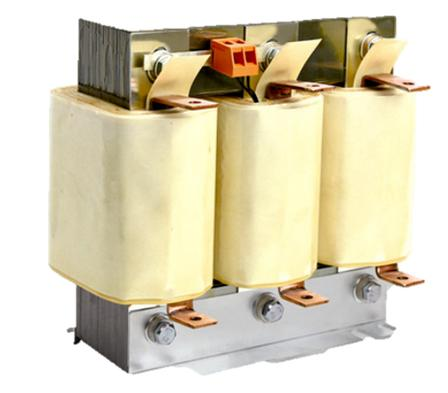
Compact form factor optimises space utilisation and supports compatibility with diverse wire harnesses. Hook-on mounting onto coil bobbins, suitable for internal wiring of filtering and VFD reactors.
-
Determine mounting form according to transformer bobbin structure: snap-on (TS/TSB) or hook-on (TSC/TSCB/K)
-
Match series rated parameters against actual operating voltage and current of the transformer.
-
Select F-suffix fuse-integrated variants if circuit overcurrent protection is needed.
-
For overseas-export projects, verify UL/VDE certificates to satisfy regional compliance requirements.
Reliable connection of small-size transformers is a non-negligible factor for complete equipment performance. Traditional lead-wire soldering and tab-clamping solutions feature inherent weaknesses in assembly efficiency, vibration resistance and safety compliance.
DEGSON dedicated transformer terminal blocks integrate wiring components with transformer bodies. Snap-on / hook-on direct mounting onto transformer bobbins eliminates intermediate lead-wire transition points. Comprehensive product portfolio plus full international approvals have been proven across numerous real-world projects for machine-tools, elevators, medical systems and reactors.
Whether for standard-model transformers or custom-developed projects, DEGSON provides full-set technical support including selection guidance, custom marking, certificates and datasheets, delivering safe and stable internal-connection solutions for global transformer customers.


