What Power-Rating Charging Connectors Should Small Distributors Prioritize for Stock?
The global electric vehicle (EV) market continues its rapid expansion, with annual new energy vehicle sales surpassing 14 million units worldwide in 2025. As the installed base of EVs grows, so does demand for charging infrastructure — and for the connectors that link vehicles to chargers. For small-scale distributors operating in this supply chain, inventory management is one of the most critical determinants of profitability. Stock too many SKUs and working capital gets trapped in slow-moving components; stock too few and customers walk away to competitors with immediate availability.
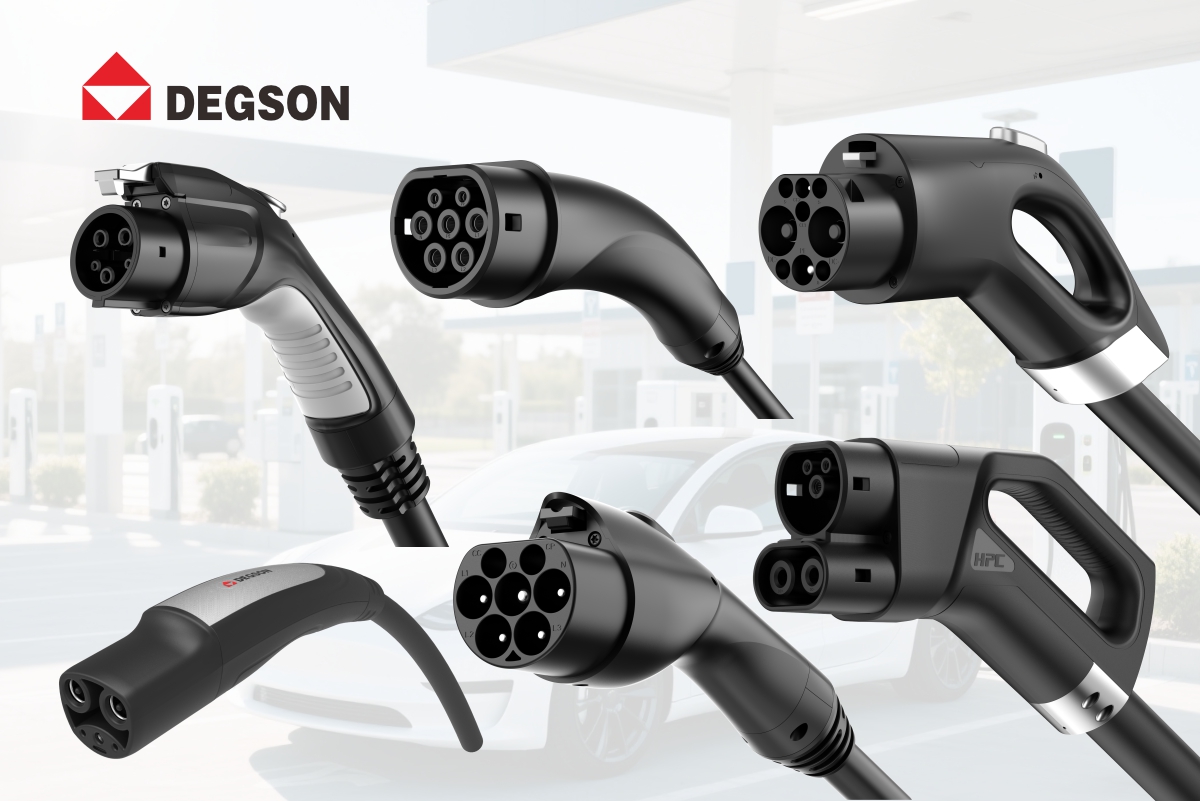
The core principle for small distributors stocking charging connectors is straightforward: limit SKU variety, improve inventory turnover, and match stock to mainstream local end-user demand. It is neither practical nor profitable to carry every available power rating. Based on market demand patterns, replacement frequency, and capital efficiency, distributors should prioritize AC charging connectors rated 7 kW, 11 kW and 22 kW, supplemented by a limited quantity of 60 kW DC fast-charging connectors. Higher-power models — 120 kW and above — should be ordered on a project-by-project basis rather than held in regular stock.
This guidance targets small and medium-sized distributors serving EV charger integrators, electrical installers, and maintenance and repair contractors. It does not apply to large-scale EPC contractors, highway charging network operators, or OEM-designated component suppliers, whose procurement volumes and project structures follow entirely different economics.
1. Inventory Constraints for Small Distributors
Small distributors commonly face three structural constraints that large distributors do not. First, working capital is limited. A typical small distributor may allocate only 300,000 to 800,000 RMB (or equivalent) to charging-component inventory, which means every SKU carried directly competes for the same pool of cash. Second, warehouse space is restricted. Most small distributors operate from offices or small industrial units with under 200 square meters of storage, making bulky high-power cable assemblies expensive to shelve. Third, customer orders are predominantly small-batch and sporadic — a dozen connectors here, a replacement cable there — rather than the container-load orders that large distributors receive.
Stocking the full power-rating portfolio under these constraints will inevitably create slow-moving inventory. A 250 kW liquid-cooled DC connector, for example, may sit on a shelf for six to twelve months before a matching project appears, during which time its capital could have funded four or five turns of 7 kW AC connectors. Conversely, insufficient stock triggers frequent lost orders: when an installer needs two 22 kW connectors for a same-week installation and you cannot deliver, that installer will develop a habit of sourcing from your competitor.
A power rating qualifies for regular stock only when all three of the following conditions are simultaneously satisfied:
7.Stable monthly inquiry volume for this rating in the local market — at least 5 to 8 distinct customer inquiries per month;
8.Reliable supplier lead-time for spot procurement, ideally under two weeks, so that stock-outs can be replenished quickly;
9.A high share of replacement-repair and minor-project spare-part orders, which tend to be urgent and price-insensitive compared with large project tenders.
Out-of-scope scenarios: If your core customers are highway ultra-fast charging stations, heavy-duty megawatt-charging fleets, or bus-depot charging networks, this priority framework is invalid. Components for those deployments should be purchased against project-specific BOMs with negotiated lead-times and volume pricing.
2. Core Regular Stock: 7 kW, 11 kW and 22 kW AC Connectors
AC slow-charge connectors dominate private residential chargers, office-building parking, and destination charging deployments at hotels, shopping malls and residential communities. Because AC chargers have the largest installed base of any charger type, the field-failure and replacement market for AC connectors is correspondingly large. Continuous repair-and-replacement requests support healthy inventory turnover, making AC connectors the foundational stock portfolio for small distributors.
2.1 7 kW (Single-Phase AC)
The 7 kW single-phase AC connector is the most widely adopted rating for home EV chargers globally. In China, the vast majority of private residential wall-box chargers operate at 7 kW / 32 A on single-phase 220 V supply. In Europe, 7.4 kW (32 A single-phase) is equally common. This rating is compatible with all major physical interface standards — GB/T in China, Type 2 in Europe, and J1772 in North America — making it the most universal connector in the market. Replacement orders for 7 kW connectors are the most frequent of any power rating, driven by cable damage, connector wear, and charger upgrade cycles. We recommend that 7 kW connectors represent approximately 45% of total AC connector stock value.
2.2 11 kW (Three-Phase AC)
The 11 kW three-phase AC connector is popular for sites with three-phase grid access, including residential properties in Europe (where three-phase household supply is standard), corporate parking lots, and small commercial destinations. It occupies a useful middle ground: it charges roughly 50% faster than 7 kW while avoiding the higher hardware and installation costs of 22 kW. For distributors, 11 kW connectors are particularly relevant in European and Australian markets, where three-phase residential supply is widespread. In the Chinese market, 11 kW is less common in private homes but appears in enterprise and commercial parking installations.
2.3 22 kW (Three-Phase AC)
The 22 kW three-phase AC connector represents the practical upper-limit power for AC installations under standard three-phase grid supply (400 V / 32 A three-phase). It is the mainstream choice for commercial car-park destination charging, office-building employee charging, and hotel and retail destination chargers. Installers and electrical contractors place frequent purchasing requests for 22 kW connectors because they are the default specification for most commercial AC charging projects. Although 22 kW connectors have a higher unit cost than 7 kW, their order frequency from commercial installers justifies regular stock.
Compliance note: Identical power ratings do not guarantee cross-region interchangeability. Type 2 serves Europe, J1772/NACS for North America, and GB/T for mainland China. Stock must differentiate both power rating AND physical connector form-factor. A 22 kW Type 2 connector cannot be used on a GB/T charger, even though both are 22 kW three-phase AC. Reference source: IEC 62196-2 standard.
When power rating, interface requirement and compliance requirements are met, DEGSON AC charging connector series covers 7–22 kW AC charging applications with multiple interface options including GB/T, Type 2 and J1772. Distributors may select these products as spot-stock alternatives. Please confirm the interface version for target markets before purchasing, as regional certification (CE, CQC, NRTL) must also match the destination market.
3. Limited-Quantity Trial Stock: 60 kW DC Connectors
60 kW DC fast-charge connectors are deployed in community public chargers, light-fleet depots, ride-hailing operator charging points, and small commercial fast-charge stations. Compared with AC units, DC connectors carry significantly higher unit cost and capital exposure per SKU. A 60 kW DC connector with cable assembly may cost five to eight times more than a 7 kW AC connector, while field-failure replacement frequency remains lower because DC chargers are fewer in number and often under manufacturer maintenance contracts.
For these reasons, small distributors should not stock 60 kW DC connectors in large quantities. The recommended approach is to maintain minimal safety stock — a reference level of 1 to 2 sets against average monthly orders — sufficient to cover urgent replacement requests and small project orders. This allows the distributor to respond quickly to immediate needs without tying up excessive capital. Ratings starting at 120 kW DC are almost entirely project-driven; handle them via on-demand sourcing without regular stock.
From a market-trend perspective, 60 kW DC occupies an interesting position. It is powerful enough to serve as a public fast charger for passenger vehicles (delivering approximately 200 km of range in 30 minutes for a typical EV), yet modest enough that installation does not require costly grid upgrades or liquid-cooled cable systems. This makes 60 kW the most common DC power rating in community and neighbourhood charging deployments, particularly in China where urban land costs make large 120 kW+ stations harder to site in residential areas.
Critical risk note: DC connector power rating must match cable assembly and cooling architecture. A 60 kW DC connector cannot be reused directly inside a 180 kW ultra-fast charger. Over-rating operation leads to excessive temperature rise at the contact interface, accelerated insulation degradation, and ultimately contact burn-out failures that can cause charger damage and safety hazards. Always verify that the connector, cable, cooling system and charger power module are specified for the same power level.
For 60 kW air-cooled DC scenarios, DEGSON DC charging connectors are suitable for community public chargers and light-duty fleet depot projects. Due to the high unit cost of DC components, small-batch trial stocking is recommended for distributors. DEGSON DC connectors support both GB/T and CCS2 interface standards, covering the Chinese domestic market and key export destinations.
4. High-Power Ratings: Avoid Regular Stock, Adopt Project-Based Sourcing
DC ultra-fast connectors at 120 kW, 180 kW, 250 kW and above are mainly deployed on highway service areas, large-scale urban charging hubs, and heavy-duty vehicle charging facilities. The global ultra-fast charging segment is growing rapidly — driven by 800 V vehicle architectures, longer-range EVs, and government subsidies for high-power public charging — but this growth does not translate into regular-stock opportunities for small distributors.
Orders for high-power connectors are heavily project-oriented. A single highway station project may require 8 to 16 units of 180 kW or 250 kW connectors in one purchase order, followed by months of no demand at all. Order quantities are volatile, unit prices are high (often 10 to 20 times the cost of a 7 kW AC connector), and hardware revision cycles are relatively fast as liquid-cooling technology, contact design and material specifications continue to evolve. Holding regular stock of these SKUs means exposing significant capital to components that may become obsolete before they are sold.
Recommended practices for small distributors handling high-power connector inquiries:
10.Do not maintain safety stock. Place supplier orders only upon receiving confirmed project requirements with a signed purchase order or deposit;
11.Verify standard revision and cooling type (air-cooled / liquid-cooled). Liquid-cooled DC connectors incorporate coolant channels and cannot directly substitute air-cooled counterparts, even at the same power rating;
12.Communicate realistic lead-times to customers. High-power liquid-cooled connectors may have lead-times of 4 to 8 weeks, and promising immediate off-the-shelf delivery can result in contractual penalties and reputational damage.
For DC connectors of 120 kW and above, DEGSON supports project-specific supply within its product coverage. Distributors are advised to request quotation after confirming project requirements — including power rating, interface standard, cooling type, cable length and certification requirements — instead of keeping these items as regular inventory SKUs. For projects involving liquid-cooled high-power connectors, distributors should confirm technical specifications and supply capability with the upstream supplier in advance to ensure project delivery.
5. Inventory Rotation and Procurement Rhythm
Beyond selecting the right power ratings, small distributors should establish a disciplined inventory rotation and procurement rhythm. We recommend a quarterly review cycle: at the end of each quarter, calculate the inventory turnover rate (cost of goods sold divided by average inventory value) for each power-rating SKU. Any SKU with a turnover rate below 2.0 turns per year should be flagged for reduction — either by lowering the reorder point, returning excess stock to the supplier under a buy-back agreement, or offering promotional pricing to move stock.
A practical reorder-point formula for small distributors is: Reorder Point = (Average Monthly Demand × Supplier Lead-Time in Months) + Safety Stock. For 7 kW AC connectors, with an average monthly demand of 20 units and a supplier lead-time of 0.5 months, the reorder point would be (20 × 0.5) + 10 = 20 units. For 60 kW DC connectors, with average monthly demand of 1.5 units and lead-time of 1 month, the reorder point would be (1.5 × 1) + 2 = 3.5, rounded to 4 units. Adjust these figures based on your actual local demand data.
Finally, maintain open communication with your upstream supplier. Many connector manufacturers, including DEGSON, offer distributor programs with preferential lead-times, volume pricing, and technical support. Building a strong supplier relationship means you can respond to customer inquiries faster — even for high-power SKUs that you do not stock — because you know exactly what is available and when it can ship.
FAQ
Q1: How should a newly established small distributor structure its first batch of charging connector inventory?
The 7 kW AC connector should serve as the base inventory, accounting for roughly 40%–50% of the first-batch stocking budget, with 11 kW and 22 kW AC models added to cover commercial installation demand, and only 1–2 sets of 60 kW DC connectors kept for emergency replacements. Total initial investment should stay within 60%–70% of available inventory capital, reserving cash flow for replenishment and trial orders of new SKUs. After two to three quarters of operation, the structure should be adjusted based on actual turnover data rather than covering every power level from day one.
Q2: Can AC connectors with the same power rating but different interface standards be stocked as a single SKU?
No. A 22 kW Type 2 connector cannot be used on a GB/T charging station, even though both are 22 kW three-phase AC. Interface standard and power rating are two independent dimensions of inventory management and must be maintained as separate SKUs: Type 2 for Europe, J1772 for North America, and GB/T for China. Merging them may appear to streamline the SKU count, but in practice it leads to mismatched shipments, customer returns, and compliance risks. Cross-border distributors should maintain separate inventory units per target market and verify the corresponding certification requirements (CE, NRTL, CQC) for each.
Q3:What signals indicate that a trial SKU should be converted to regular stock, and what signals indicate it should be phased out?
Conversion to regular stock rests on three quantifiable signals: inquiries from at least five different customers per month for two to three consecutive months; an actual closing rate above 30%; and a stable supplier replenishment lead time of under two weeks. The phase-out signals are equally clear: annual inventory turnover below 2.0, zero sales for two consecutive quarters, or an upstream hardware revision that makes existing stock obsolete before it sells. Phase-out can be handled through supplier buy-back agreements or promotional pricing to accelerate clearance, with the released capital redirected to high-turnover AC SKUs.


