Why Certification Compliance Is the Biggest Barrier to Entry for EV High-Voltage Connector Suppliers
The electric vehicle market is growing rapidly, and many connector manufacturers are eager to enter the high-voltage automotive space. But only a small number successfully establish themselves with major OEMs. One of the most significant barriers is not core technology or manufacturing capacity — it is certification compliance. Meeting the combined requirements of IATF 16949, LV215, and USCAR requires years of sustained investment, deep automotive domain expertise, and a systematic approach to quality that many general connector manufacturers lack. For automakers, understanding this barrier is critical, because it explains why partnering with established, certified suppliers like DEGSON significantly reduces qualification and supply chain risk compared with onboarding unproven new entrants.
To understand why certification creates such a high barrier, let's break down what each standard actually requires to achieve and maintain.
Start with IATF 16949. Many manufacturers assume it is just ISO 9001 with an automotive label. In reality, it is far more demanding. IATF 16949 requires full implementation of automotive-specific quality tools including APQP, PPAP, FMEA, SPC, and MSA across the entire organization. It requires customer-specific requirement alignment, full part traceability, layered process audits, and a formal continuous improvement system. Achieving initial certification typically takes 12 to 18 months of preparation, including process documentation, employee training, internal audits, and a pre-certification audit. And once certified, companies must pass annual surveillance audits and a full recertification audit every three years. For companies accustomed to commercial or industrial connector markets, the level of documentation, process discipline, and traceability required by IATF 16949 represents a major organizational change.
Next is LV215, the high-voltage connector performance standard for European electric vehicles. LV215 is not a system certification that can be obtained through a third-party audit alone — it is a test specification that each product design must pass through full validation. Full LV215 validation involves more than 30 individual test items, performed sequentially on the same set of samples over a period of several months. It requires specialized high-voltage test equipment, environmental chambers capable of precise temperature cycling, vibration shakers calibrated to automotive profiles, and trained test engineers who understand the standard's nuances. Most importantly, passing LV215 almost always requires multiple design iterations. Very few connector designs pass on the first attempt. Companies without deep high-voltage automotive experience often go through two, three, or more redesign cycles before achieving full compliance, adding months to development timelines and substantial validation costs.
Third is USCAR compliance for the North American market. Like LV215, USCAR is a performance test standard, not a system certification. It requires extensive durability testing including thermal shock, humidity cycling, salt spray, vibration, mechanical shock, and current cycling. While USCAR tests were originally developed for low-voltage connectors, applying them to high-voltage connectors introduces additional complexity: higher currents and voltages amplify the impact of even small deviations in contact resistance or insulation performance. Suppliers must also demonstrate that high-voltage safety features like HVIL remain fully functional after all environmental stress tests. This means USCAR validation for high-voltage connectors is significantly more rigorous than for traditional low-voltage parts, and requires specialized test setups that most connector manufacturers do not have in place.
When you combine all three — IATF 16949, LV215, and USCAR — the barrier becomes clear. A supplier cannot simply "get certified" in a few months. They need to build a quality system from the ground up, commit significant capital to specialized testing equipment, develop product designs optimized for automotive standards, and build a team of engineers who understand automotive requirements end to end. This is why so many new entrants to the electric vehicle connector market struggle to gain traction with major OEMs. They may have a prototype product that works in a demo environment, but they cannot back it up with the certification infrastructure and quality systems that automakers require for series production.
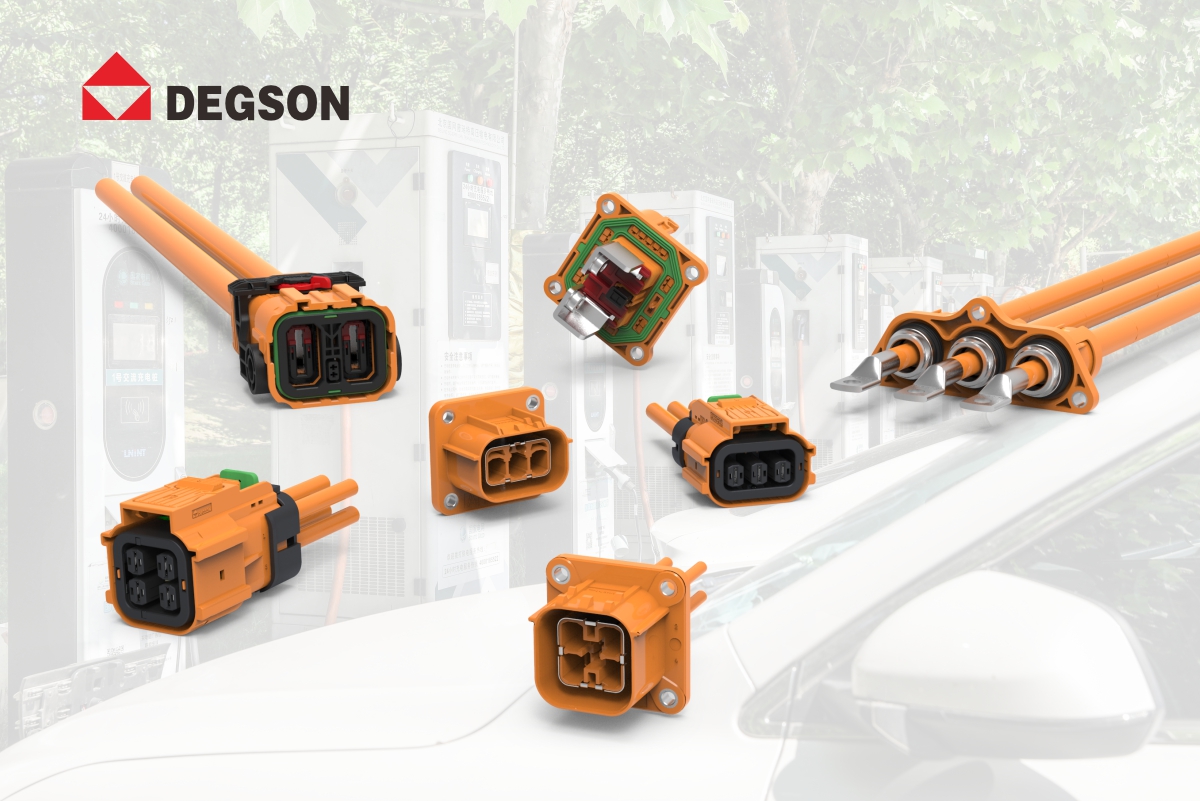
This is where DEGSON stands out from the competition. DEGSON did not enter the automotive high-voltage connector market overnight. The company invested years in building its IATF 16949 certified quality system, developing in-house test laboratories capable of full LV215 and USCAR validation, and building a team of automotive connector engineers with deep domain expertise. Today, DEGSON's entire high-voltage connector portfolio is designed from inception for automotive certification compliance, which means faster time-to-market for customers and lower certification-related project risk.
For electric vehicle manufacturers, this certification maturity translates directly into reduced program risk. When you work with a supplier like DEGSON that already has all three core certifications in place, you avoid the delays, costs, and uncertainties that come with bringing a new supplier up to automotive quality standards. You do not have to spend months auditing their quality system or waiting for them to complete LV215 testing. You get a proven product design, a validated production process, and a supplier that operates with the same quality frameworks as your organization.
DEGSON also continues to invest ahead of emerging certification requirements. As the electric vehicle industry evolves toward 800V architectures and faster charging speeds, new test standards and certification requirements are emerging. DEGSON actively participates in industry standards working groups and updates its test capabilities and product designs proactively, so customers are prepared for next-generation certification requirements before they become mandatory.
In conclusion, certification compliance is one of the most formidable barriers to entry in the automotive high-voltage connector market, and for good reason. The safety-critical nature of electric vehicle high-voltage systems demands suppliers that can demonstrate consistent quality and reliable performance through independent, standardized testing. IATF 16949, LV215, and USCAR together create a high bar that filters out underprepared suppliers. DEGSON has cleared that bar, and continues to refine its systems and products as standards evolve. For electric vehicle manufacturers looking for a reliable, certification-ready high-voltage connector partner, DEGSON offers a proven, low-risk path from prototype to full production.
References
-
IATF 16949:2016. Automotive Quality Management System Standard. International Automotive Task Force (IATF).
-
LV 215-1:2017. High-Voltage Connectors for Motor Vehicles – General Requirements and Test Methods. German Automotive OEM Working Group (LV).
-
SAE USCAR-2 Rev.7:2020. Performance Specification for Automotive Electrical Connector Systems. United States Council for Automotive Research (USCAR).
About the Author: The DEGSON automotive product management team specializes in high-voltage connection solutions for electric vehicles, with deep expertise in LV215/USCAR standard compliance and IATF 16949 quality system implementation. The team supports global OEMs and Tier 1 suppliers in building safe, reliable, and cost-effective high-voltage powertrain architectures.
FAQ
1. What is the core entry barrier for the EV high-voltage connector industry?
The core barrier is certification compliance, including IATF 16949 system requirements and regional product standards such as LV215 and USCAR.
2. What is the essential difference between IATF 16949, LV215 and USCAR?
IATF 16949 is a quality management system certification; LV215 and USCAR are product-level test specifications for European and North American markets.
3. How long does full LV215 product validation usually take?
Full LV215 validation covers over 30 sequential tests and takes several months; most designs require multiple iterations to pass.
4. Why can't industrial high-voltage connectors be used directly in electric vehicles?
They lack sequential environmental aging validation and systematic quality control, and cannot meet automotive-grade safety, reliability and compliance requirements.
5. What are DEGSON's core advantages in EV high-voltage connector certification compliance?
DEGSON has an IATF 16949 certified system and in-house test labs. Its full product line aligns with LV215/USCAR, with proactive planning for next-generation standards.


