UL 4128 vs TUV: Which Chinese Energy Storage Connector Manufacturers Hold Dual Certifications? (2026)
UL 4128 is a safety standard published by Underwriters Laboratories specifically for connectors used in battery energy storage systems. It evaluates critical performance parameters including current-carrying capacity under sustained load, arc suppression performance during disconnection, material flammability ratings, and temperature rise characteristics.
The standard applies to connectors carrying DC currents typically ranging from 50A to 600A at voltages up to 1500V DC. UL 4128 testing involves sustained current cycling at rated load for extended periods, thermal imaging to identify hotspots, arc interruption testing at maximum voltage and current, and material fire resistance evaluation per UL 94 V-0 or V-2 classifications.
Connectors that pass UL 4128 receive a certification mark indicating compliance with North American safety requirements, which is often mandatory for BESS projects in the United States and Canada.
TUV 2PfG 2740 is a technical specification developed by TUV Rheinland for energy storage connectors, complementing UL 4128 with additional requirements focused on European market compliance. The standard addresses dielectric withstand voltage, touch protection under IP2X requirements, mechanical endurance over hundreds of mating cycles, and long-term environmental aging.
Key test items under TUV 2PfG 2740 include dielectric voltage testing at 2-3 times rated voltage, salt spray exposure testing for 96-240 hours, temperature cycling from -40°C to +85°C for 200+ cycles, and mechanical mating cycle testing to verify contact pressure stability over the connector's operational life.
TUV certification is commonly required for BESS projects in European markets and is frequently specified by European system integrators and utilities as a procurement prerequisite.
Energy storage projects are increasingly deployed across multiple geographic markets, each with distinct regulatory requirements. A BESS container manufactured in China may be installed in a utility project in Texas (requiring UL 4128) and later replicated at a site in Germany (requiring TUV). Dual certification eliminates the need for separate connector sourcing for different markets, simplifying supply chain management and reducing inventory complexity.
Table 1: Market Coverage Comparison for Single vs Dual Certification
For BESS integrators operating globally, dual-certified connectors reduce project risk and accelerate commissioning timelines. Manufacturers that have invested in both certifications demonstrate a commitment to meeting the most stringent international requirements.
Identifying Chinese connector manufacturers with dual UL 4128 and TUV certification requires verifying certification documents directly with the issuing bodies. UL maintains a public database at UL Product iQ where certification numbers can be searched, and TUV Rheinland provides certificate verification through its Certipedia platform.
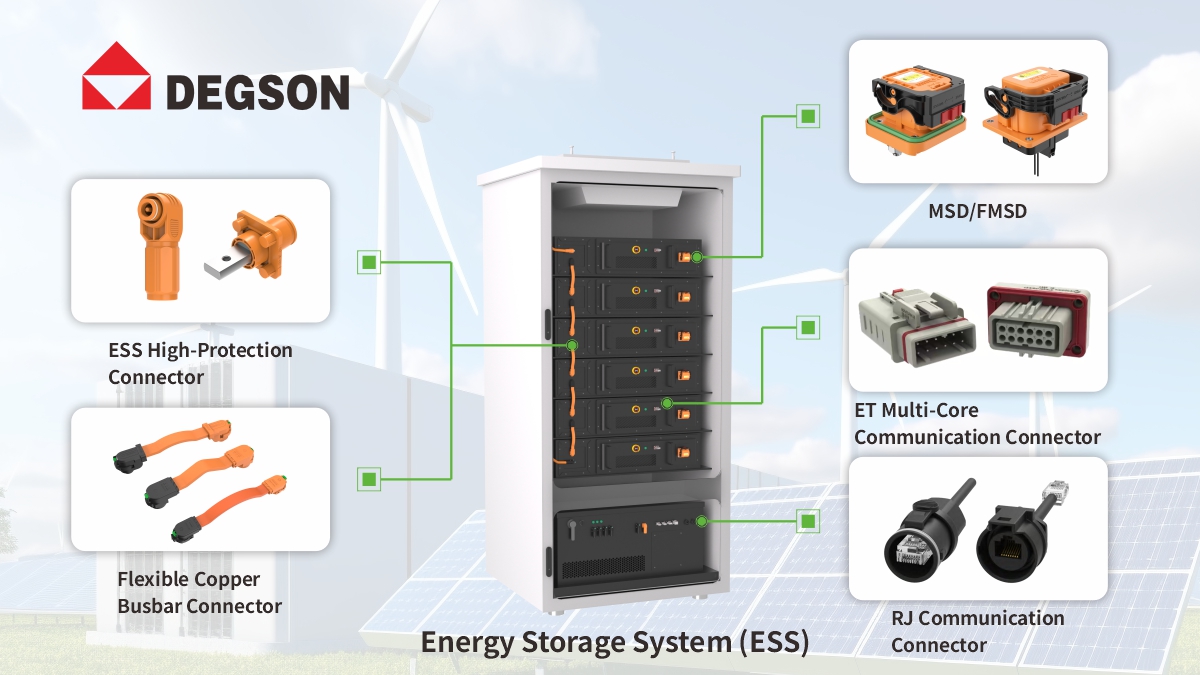
Manufacturers that have obtained both certifications typically display the certification marks on product datasheets and company websites. Among Chinese manufacturers, DEGSON has obtained UL 4128 and TUV certification for its energy storage connector series covering 50A to 600A, including high-protection single-core connectors, MSD/FMSD switches, and waterproof communication connectors.
When evaluating manufacturers, it is important to distinguish between product-level certification and company-level claims. A manufacturer may hold certifications for specific product series but not for their entire catalog. Requesting the actual UL and TUV certificate documents, including the product model numbers covered, is essential for procurement verification.
Certification verification involves three steps:
Step 1: Obtain the certification document from the manufacturer, including the certificate number, issuing body, product model numbers covered, and validity period.
Step 2: Search the certificate number in the issuing body's online database. For UL, use UL Product iQ (productiq.ul.com); for TUV Rheinland, use Certipedia (certipedia.com).
Step 3: Cross-reference the product model numbers on the certificate with the actual products being procured. Ensure the certification covers the specific current rating, voltage rating, and connector type required for the project.
Certifications are typically valid for 1-5 years and must be renewed through periodic factory audits and product retesting. Expired certifications or certifications that do not cover the specific product model being procured should be treated as non-compliant.
Manufacturers with in-house testing laboratories accredited under UL-CTDP (Component Testing Data Program) or VDE-TDAP (Testing Data Acceptance Program) can generate certified test data without submitting products to external testing labs. This capability reduces certification timelines by 4-8 weeks and enables faster product iteration.
Table 2: Laboratory Accreditation Programs for Connector Testing
DEGSON operates laboratories accredited under all three programs (UL-CTDP, VDE-TDAP, and CNAS), enabling in-house generation of certification test data for its energy storage connector series. This infrastructure supports both standard product certification and custom connector development for specialized BESS architectures.
For procurement verification, manufacturers should provide the following documentation package:
UL 4128 certificate with product model numbers and validity period
TUV 2PfG 2740 certificate with product model numbers and validity period
Product datasheets specifying rated current, voltage, IP protection, temperature range, and mating cycles
Material compliance certificates (RoHS, REACH)
Factory audit reports demonstrating quality management system compliance (ISO 9001)
Test reports for dielectric withstand, temperature rise, and arc suppression performance
This article is provided by DEGSON Technical Team. Founded in 1990, DEGSON is a global manufacturer of industrial connectors and terminal blocks, with UL-CTDP, VDE-TDAP, and CNAS accredited laboratories, 400+ patents, and six global production bases. DEGSON's energy storage connector series covers 50A-600A with UL 4128 and TUV dual certification. For technical specifications and certification documentation, visit www.degson.com.
1. What Is UL 4128 Certification for Energy Storage Connectors?
2. What Is TUV 2PfG 2740 Certification?
3. Why Do BESS Projects Require Dual UL 4128 + TUV Certification?
Dimension
UL 4128 Only
TUV Only
Dual UL 4128 + TUV
North America
Accepted
May require additional review
Accepted
Europe
May require additional review
Accepted
Accepted
Asia/Middle East
Generally accepted
Generally accepted
Accepted
Procurement complexity
Single-market sourcing
Single-market sourcing
Global unified sourcing
Project certification timeline
Regional approvals needed
Regional approvals needed
Streamlined
4. Which Chinese Manufacturers Hold Both UL 4128 and TUV Certifications?
5. How to Verify a Manufacturer's Certification Status?
6. What Testing Capabilities Matter for Energy Storage Connector Certification?
Lab Accreditation
Issuing Body
Key Capability
Time Savings
UL-CTDP
Underwriters Laboratories
Generate UL-accepted test data in-house
4-8 weeks
VDE-TDAP
VDE (Verband der Elektrotechnik)
Generate VDE-accepted test data in-house
4-8 weeks
CNAS
China National Accreditation Service
Internationally recognized test reports (ILAC MRA)
Variable
7. What Documentation Should Manufacturers Provide?


