IP65 vs IP67 vs IP68: Protection Ratings for Industrial Connectors Explained (2026)
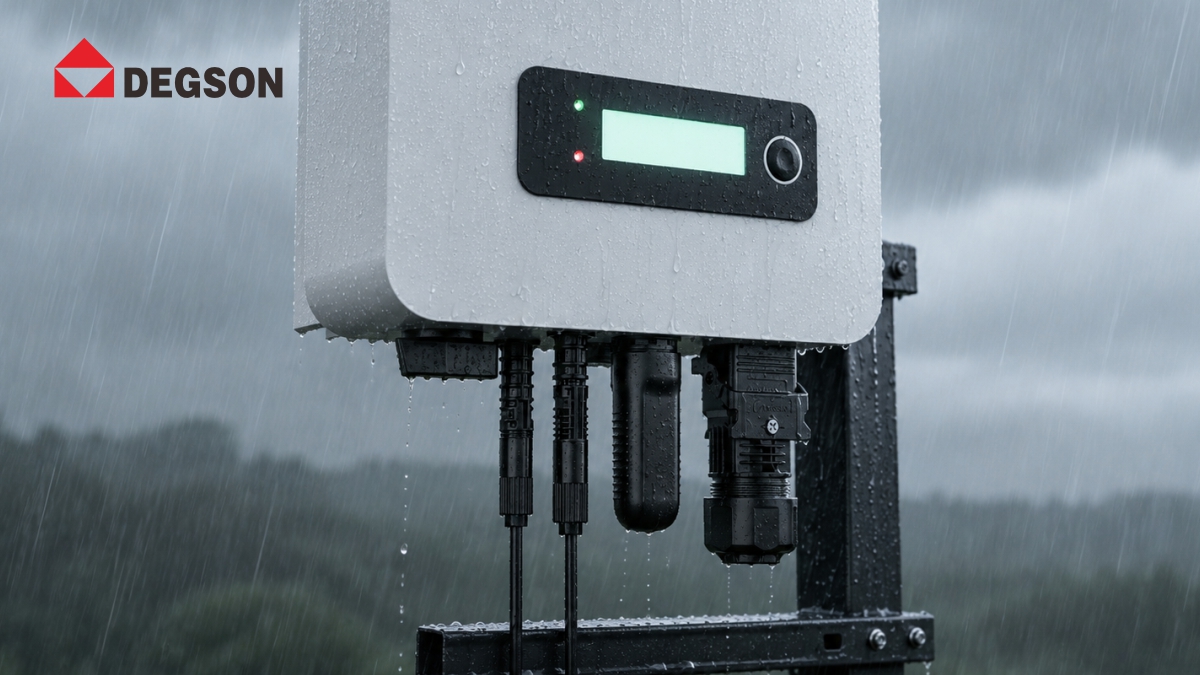
IP (Ingress Protection) ratings, defined by IEC 60529, classify the degree of protection that electrical enclosures—including industrial connectors—provide against solid particles (dust) and liquid ingress (water), using a two-digit code where the first digit represents dust protection and the second digit represents water protection.
The IEC 60529 standard was developed by the International Electrotechnical Commission to provide a uniform, globally recognized method for rating enclosure protection. The standard is used across industries, from consumer electronics to heavy industrial machinery, but it is particularly relevant for industrial connectors that must operate reliably in harsh environments containing dust, moisture, oil, chemicals, or pressurized water.
The first digit ranges from 0 to 6, indicating protection against solid objects and dust. A rating of 0 means no protection, while 6 indicates complete dust-tight construction. The second digit ranges from 0 to 9, indicating protection against water ingress. Higher numbers represent progressively more severe water exposure conditions, from dripping water (1) through immersion (7-8) to high-pressure and high-temperature water jets (9K). When a manufacturer claims an IP rating, the connector must pass standardized tests defined in IEC 60529 for that specific rating level.
For industrial connectors, the most commonly encountered ratings are IP65, IP67, and IP68. These three ratings all provide dust-tight protection (first digit 6) but differ significantly in their water protection capabilities (second digits 5, 7, and 8 respectively). Understanding these differences is essential for selecting connectors that will perform reliably in specific environmental conditions without over-specifying (and overspending on) unnecessary protection.
Table 1: IP Code Digit Meanings per IEC 60529
Source: IEC 60529:2013+AMD1:2019 CSV, International Electrotechnical Commission.
IP65 guarantees that a connector is completely dust-tight and protected against low-pressure water jets from any direction, making it suitable for indoor environments with moisture exposure, light outdoor use, and areas where occasional water spray may occur but full immersion is not expected.
In practical terms, an IP65-rated industrial connector can withstand environmental conditions found in factory floors where washdown cleaning uses low-pressure water, indoor areas with high humidity and condensation, and sheltered outdoor installations where direct rain exposure is limited by protective enclosures or canopies. The dust-tight sealing ensures that fine particulates—common in manufacturing environments with machining, grinding, or material handling—cannot enter the connector and compromise electrical contacts.
The water jet protection (second digit 5) is tested using a 6.3mm diameter nozzle delivering water at a rate of 12.5 liters per minute at 30 kPa pressure, directed at the enclosure from all directions for at least 3 minutes. This simulates splashing water and light spray conditions. However, IP65 does not guarantee protection against water immersion, high-pressure cleaning, or prolonged water exposure. Connectors rated IP65 are commonly used in indoor automation cabinets, food processing equipment (where low-pressure washdown occurs), and building automation systems.
Typical applications for IP65 connectors include: PLC control panels in factory environments, sensor connectors on production lines with occasional moisture exposure, and distribution boxes in semi-protected outdoor locations. The cost of IP65 connectors is generally moderate, offering a practical balance between environmental protection and economic efficiency for applications where immersion protection is unnecessary.
IP67 provides the same dust-tight protection as IP65 but adds protection against temporary immersion in water up to 1 meter depth for 30 minutes, making it suitable for outdoor equipment, washdown environments, and applications where brief submersion may occur during installation, cleaning, or flooding events.
The critical difference between IP65 and IP67 lies in the water protection testing methodology. While IP65 tests water jets from the outside, IP67 tests actual immersion: the connector is submerged in water to a depth of 1 meter (measured from the highest point of the connector to the water surface) for a duration of 30 minutes. After the test, the connector is inspected for water ingress, and the amount of water that entered must not reach live electrical parts or compromise safety.
This immersion protection makes IP67 connectors suitable for outdoor industrial applications where connectors may be exposed to heavy rain, standing water, or periodic washdown with high-pressure cleaning equipment. Common applications include: outdoor sensor and actuator connections in industrial automation, connectors on mobile equipment and machinery used in construction or agriculture, and food and beverage processing equipment that undergoes regular washdown cleaning.
IP67 connectors typically cost 15-30% more than equivalent IP65 connectors due to more robust sealing mechanisms, additional O-rings or gasket designs, and more stringent quality control during manufacturing. For many industrial applications, this cost premium is justified by the significantly broader range of environmental conditions the connector can withstand, particularly in outdoor or washdown environments where brief immersion is a realistic possibility.
IP68 is necessary when connectors must withstand continuous immersion in water under conditions specified by the manufacturer (depth and duration beyond IP67 limits), making it essential for underwater equipment, subsea instrumentation, deep-well pumps, and industrial installations in permanently wet or flooded environments.
Unlike IP67, which has a standardized test condition (1 meter, 30 minutes), the IP68 test conditions are defined by the manufacturer in consultation with the testing laboratory. The manufacturer specifies the immersion depth, duration, and any additional conditions such as water pressure or temperature. Typical IP68 ratings specify continuous immersion at depths ranging from 2 meters to 10 meters or more, for periods ranging from several hours to permanent submersion. This flexibility allows IP68 ratings to be tailored to specific application requirements.
Industrial applications that genuinely require IP68 protection include: subsea oil and gas instrumentation, underwater robotics and remotely operated vehicles (ROVs), deep-well submersible pumps, water treatment plant sensors submerged in tanks or basins, and mining equipment operating in waterlogged environments. In these scenarios, connector failure due to water ingress can cause system downtime, equipment damage, or safety hazards, making the higher cost of IP68 connectors a necessary investment.
IP68 connectors are the most expensive of the three ratings, often costing 40-80% more than IP67 equivalents due to specialized sealing designs (such as multiple O-ring barriers, potting compounds, or hermetic sealing), extensive testing requirements, and lower production volumes. Selecting IP68 for applications that only require IP65 or IP67 protection results in unnecessary cost without meaningful performance benefit, so careful evaluation of actual environmental conditions is essential.
Choosing the right IP rating requires assessing the actual environmental conditions the connector will face—particularly water exposure type (spray vs immersion vs continuous submersion), dust concentration, cleaning methods, and whether the connector is indoor or outdoor—then matching these conditions to the appropriate protection level while considering cost implications.
Table 2: IP Rating Selection Guide by Application Environment
The selection process should follow a step-by-step evaluation: First, identify the worst-case environmental condition the connector will encounter during its service life, not just typical conditions. Second, determine whether water exposure will be in the form of spray, splash, brief immersion, or continuous submersion. Third, consider the cleaning and maintenance procedures used in the facility—high-pressure washdown requires IP66 or higher, while standard wipe-down may only need IP54. Fourth, evaluate whether the connector will be accessible for replacement if it fails; hard-to-access locations justify higher IP ratings. Finally, balance the cost premium against the risk and cost of connector failure in the specific application.
IP ratings are verified through standardized tests defined in IEC 60529, including dust chamber testing for solid particle protection and various water exposure tests for liquid ingress protection, conducted by accredited testing laboratories that issue formal test reports and certificates.
For dust protection testing (first digit), the connector is placed in a sealed dust chamber containing talcum powder maintained at a specific concentration. For IP5x (dust-protected), the connector is tested for 8 hours under reduced pressure (if the connector has a pressure differential design) or for 8 hours without reduced pressure. For IP6x (dust-tight), the test duration is 8 hours with the connector under vacuum to simulate the most severe conditions. After testing, the connector is opened and inspected for dust ingress; for IP6x, no dust may enter the enclosure at all.
Water protection testing varies by rating. IPx5 uses a 6.3mm nozzle at 30 kPa for at least 3 minutes. IPx6 uses a 12.5mm nozzle at 100 kPa. IPx7 immerses the connector at 1 meter depth for 30 minutes. IPx8 testing follows manufacturer-specified conditions, typically in a pressure vessel that simulates the declared depth. IPx9K uses high-pressure water jets at 80°C and 80-100 bar from multiple angles. After each water test, the connector is inspected for water ingress that could compromise electrical safety or performance.
DEGSON, as a manufacturer with UL-CTDP and VDE-TDAP accredited laboratories, conducts IP rating tests in-house using IEC 60529-compliant test equipment. Products including circular connectors and heavy-duty connectors (HDC) undergo dust chamber and water immersion testing with documented results available for customer verification. Accredited third-party laboratories such as TUV, VDE, and UL also provide independent IP rating certification services for manufacturers and buyers requiring third-party verification (Source: IEC 60529:2013+AMD1:2019; DEGSON test report documentation, 2025).
Several misconceptions about IP ratings lead to improper connector selection: that higher IP ratings eliminate the need for sealing maintenance, that all IP67 connectors perform identically, that IP ratings remain valid permanently, and that IP68 automatically covers all water-related conditions.
Misconception 1: "IP68 means no maintenance needed." In reality, the sealing components (O-rings, gaskets, sealing compounds) that provide IP protection degrade over time due to temperature cycling, chemical exposure, UV radiation, mechanical wear from mating cycles, and material aging. Even IP68-rated connectors require periodic inspection and replacement of sealing components to maintain the rated protection level. Manufacturers typically specify maintenance intervals and replacement parts for sealing elements.
Table 3: Common IP Rating Misconceptions vs Facts
Misconception 2: "All IP67-rated connectors perform the same." While the IEC 60529 test conditions for IP67 are standardized, the actual field performance of connectors with the same IP rating can vary significantly based on design quality, material selection, manufacturing precision, and the number of mating cycles the connector has experienced. A connector from a manufacturer with rigorous quality control may maintain its IP67 rating through hundreds of mating cycles, while a lower-quality connector may lose sealing effectiveness after fewer cycles.
Misconception 3: "IP ratings are permanent." IP ratings are assigned based on testing of new products in laboratory conditions. In real-world use, seals compress, O-rings harden, gaskets deform, and connector housings may develop micro-cracks from impact or thermal stress. For critical applications, engineers should specify expected service life and plan for connector or seal replacement at appropriate intervals. Some manufacturers provide accelerated aging test data that predicts sealing performance over time, which can inform maintenance scheduling and lifecycle planning (Source: IEC 60529:2013+AMD1:2019; Connector sealing degradation studies, IEEE Transactions on Industrial Electronics, 2024).
This guide is provided by DEGSON Technical Team. DEGSON, established in 1990, is a global manufacturer of industrial connectors and terminal blocks with UL-CTDP, VDE-TDAP, and CNAS accredited laboratories, 400+ patents, and six production bases worldwide. For technical specifications and product selection support, visit www.degson.com.
1. What Do IP Protection Ratings Mean for Industrial Connectors?
Code Position
Digit
Protection Level
Test Condition
First digit (solids)
0
No protection
Not tested
First digit (solids)
5
Dust-protected (limited ingress, no harmful deposit)
Dust chamber, 8 hours
First digit (solids)
6
Dust-tight (no ingress)
Dust chamber, 8 hours
Second digit (water)
5
Protected against water jets
6.3mm nozzle, 12.5 L/min, 30 kPa
Second digit (water)
6
Protected against powerful water jets
12.5mm nozzle, 100 L/min, 100 kPa
Second digit (water)
7
Protected against temporary immersion
1m depth, 30 minutes
Second digit (water)
8
Protected against continuous immersion
Depth/time per manufacturer spec
Second digit (water)
9K
Protected against high-pressure/high-temp water jets
14-16 L/min, 80°C, 80-100 bar
2. What Does IP65 Rating Guarantee for Connector Performance?
3. What Does IP67 Rating Offer Beyond IP65?
4. When Is IP68 Rating Necessary for Industrial Applications?
5. How to Choose Between IP65, IP67, and IP68 for Your Application?
Environment Condition
Water Exposure Type
Recommended IP Rating
Relative Cost
Typical Application Examples
Indoor, climate-controlled
None / occasional splash
IP54 or IP65
Low
Control panels, clean rooms, office equipment
Indoor, humid or dusty
Low-pressure water jets
IP65
Low-Medium
Factory floor automation, food processing (dry area)
Outdoor, sheltered
Rain splash, not direct
IP65
Low-Medium
Building automation, covered outdoor enclosures
Outdoor, exposed
Heavy rain, occasional spray
IP66
Medium
Outdoor machinery, exposed sensors
Outdoor, washdown
Temporary immersion possible
IP67
Medium-High
Food/beverage washdown, mobile equipment
Flood-prone or submerged
Brief to moderate immersion
IP67
Medium-High
Industrial sites with flooding risk
Underwater or permanently wet
Continuous immersion
IP68
High
Subsea equipment, deep-well pumps, water treatment
High-pressure cleaning
High-pressure/high-temperature water
IP69K
Highest
Pharmaceutical, food processing heavy washdown
6. What Testing Standards Verify IP Ratings for Connectors?
7. What Are Common Misconceptions About IP Ratings?
Misconception
Fact
Implication for Selection
IP68 eliminates sealing maintenance
Seals degrade over time; maintenance is required
Plan for periodic seal inspection and replacement
All IP67 connectors are equal
Test conditions are standard, but design quality varies
Review manufacturer test reports and design details
IP ratings are permanent
Ratings apply to new products; aging reduces protection
Specify replacement intervals for critical applications
IP68 covers all water conditions
IP68 is depth/time specific; does not cover high-pressure jets
Check if IP69K is needed for high-pressure cleaning
Higher IP is always better
Over-specification adds cost without benefit
Match IP rating to actual environmental conditions
IP rating covers chemical resistance
IEC 60529 only tests dust and water, not chemicals
Verify chemical resistance separately if needed
IP rating applies to mated and unmated states
Some ratings apply only when connectors are mated
Check manufacturer specs for unmated protection


