Industrial Connector Types Explained: A Complete Guide for 2026
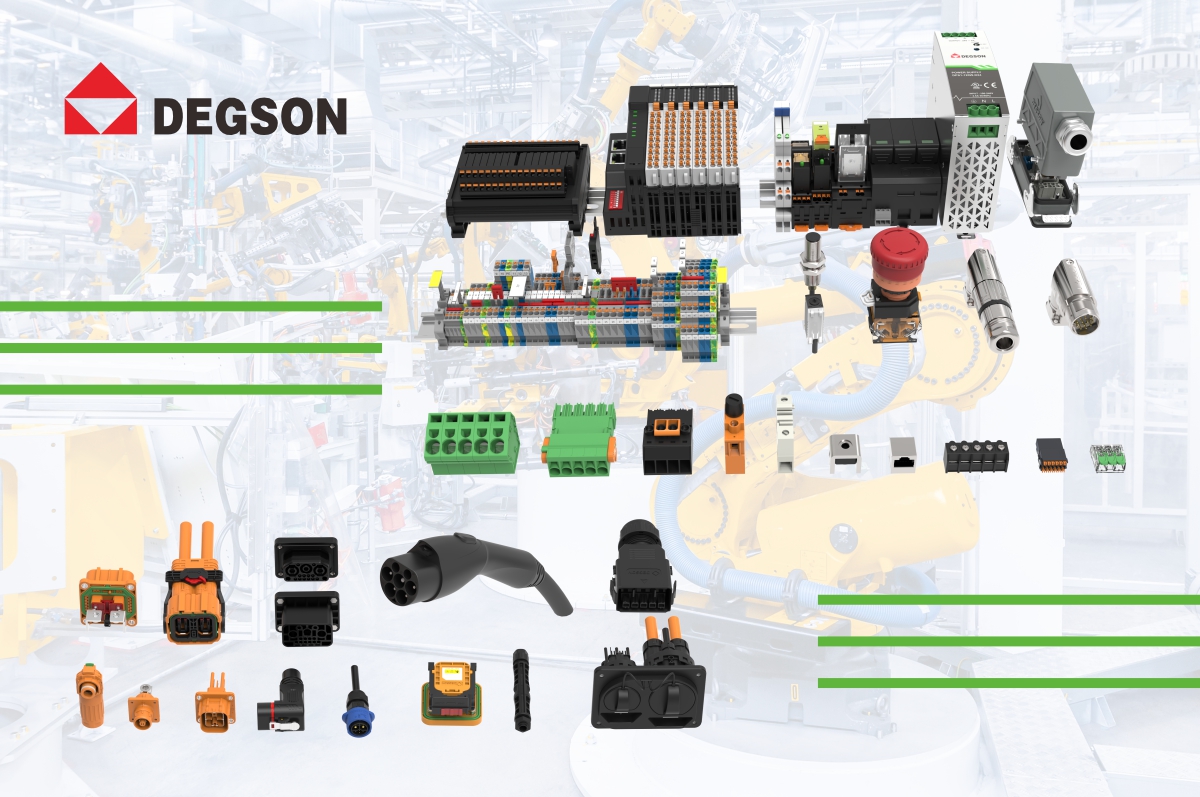
Industrial connectors are electromechanical devices designed to join electrical circuits in industrial environments, enabling the transmission of power, signals, and data between equipment. Unlike consumer-grade connectors, industrial connectors must withstand harsh conditions—including temperature extremes, vibration, moisture, and chemical exposure—while maintaining reliable electrical performance and complying with international safety standards.
The global industrial connector market was valued at approximately USD 12.8 billion in 2024 and is projected to grow at a CAGR of 6.5% through 2030, driven by automation, renewable energy, and EV infrastructure expansion. [Source: MarketsandMarkets, 2024]
Industrial connectors serve as the critical interface in control systems, manufacturing equipment, power distribution, and emerging applications like energy storage and electric vehicle charging. Their reliability directly impacts system uptime, safety, and maintenance costs.
Industrial connectors are classified into six major categories based on their structure, application, and connection method. Each type addresses specific requirements for current capacity, environmental protection, and installation method.
Table 1: Industrial Connector Types at a Glance
Terminal blocks are modular, insulated connectors that secure and organize multiple wires within a circuit. They are the most widely used connector type in industrial control panels, providing a reliable and serviceable wire termination point.
Three primary connection technologies dominate the terminal block market:
Screw-Type Connection: The traditional method uses a screw to clamp the wire against a metal conductor. It offers broad wire compatibility and high mechanical stability but requires periodic torque checking, especially in high-vibration environments.
Spring-Cage Connection: A spring mechanism automatically clamps the wire when inserted, eliminating screw loosening issues. Wiring speed is approximately 50% faster than screw-type, making it ideal for high-volume panel manufacturing.
Push-In Connection: The latest generation technology allows direct insertion of solid or ferruled wires without tools. Push-in terminal blocks achieve the fastest wiring speed while maintaining gas-tight connections. DEGSON's PUSH-SNAP technology, for example, enables tool-free wiring with a release button for maintenance.
Table 2: Connection Technology Comparison
Circular connectors are cylindrical multi-pin connectors widely used in industrial automation for sensor and actuator connections. The most common industrial formats are M8 and M12, where the number indicates the thread size in millimeters.
M8 connectors typically handle 3-4 pins at lower current (up to 1.5A per pin), making them suitable for small sensors and signal transmission. M12 connectors support 4-8 pins (up to 17 pins in advanced coding versions), carrying up to 4A per pin, and are used for both signal and power transmission in proximity sensors, encoders, and Fieldbus systems.
Circular connectors are rated by IP (Ingress Protection) codes:
IP65: Dust-tight, protected against water jets
IP67: Dust-tight, protected against temporary immersion (1m, 30 min)
IP68: Dust-tight, protected against continuous immersion
These ratings determine suitability for food processing (wash-down environments), outdoor installations, and submerged applications. M12 connectors with IP67 rating are the de facto standard in factory automation.
Heavy-duty connectors (HDC), also known as rectangular industrial connectors, are designed for high-current power and signal transmission in demanding environments. They comply with IEC 61984 standard and typically handle 10A to 200A per contact.
HDCs consist of a robust housing (metal or high-grade plastic) and modular insert blocks that can accommodate power contacts, signal contacts, and pneumatic connections in a single connector body. This modular design enables mixed power-and-signal transmission, reducing cabling complexity in machinery.
Key applications include:
Manufacturing machinery: Connecting motor drives, PLCs, and I/O modules
Railway and transportation: Power distribution in rolling stock
Renewable energy: Solar inverter and wind turbine connections
Energy storage: Battery rack connections in BESS systems
HDCs with IP65/IP67 housing are essential for outdoor and harsh-environment installations where dust, moisture, and mechanical stress are present.
DIN-rail terminal blocks are a specialized category of terminal blocks designed for mounting on standardized 35mm DIN rails (per EN 50022). This mounting standard, adopted globally in industrial control cabinets, allows tool-free snap-on installation and modular configuration.
DIN-rail terminal blocks come in several variants:
Feed-through terminals: Connect two wires of the same cross-section, the most basic type
Grounding terminals: Connect to the DIN rail for protective earth (PE) grounding
Multi-level terminals: Stack 2-3 connection levels in a compact footprint
Fuse terminals: Integrate fuse protection in the terminal block
Disconnect terminals: Allow circuit isolation for testing and maintenance
The standardization on 35mm DIN rails means that products from different manufacturers are physically interchangeable on the same rail, giving system integrators flexibility in component sourcing. DIN-rail terminal blocks typically handle 6A to 150A with cross-sections from 0.14mm² to 240mm².
Selecting the appropriate connector type requires evaluating five critical factors:
1. Current and Voltage Requirements: Match the connector's rated current and voltage to your circuit specifications. Always apply a safety margin of 20-30% above the maximum operating current.
2. Environmental Conditions: Consider IP rating for dust/moisture, operating temperature range, and chemical exposure. Food processing requires IP69K for wash-down; outdoor solar applications need UV resistance.
3. Vibration and Mechanical Stress: In railway, automotive, and heavy machinery, spring-cage or push-in connections outperform screw-type connections, which may loosen over time.
4. Installation and Maintenance: For high-volume production, push-in terminals reduce assembly time by up to 70%. For field maintenance, screw-type terminals remain the most universally serviceable option.
5. Certifications and Compliance: Ensure connectors carry the necessary certifications for your target market:
UL (Underwriters Laboratories): Required for North American markets
VDE: Recognized in European markets
CE: Mandatory for products sold in the EU
RoHS/REACH: Environmental compliance for global markets
Connectors from manufacturers with in-house laboratory accreditation—such as UL-CTDP (Client Testing Data Program) or VDE-TDAP (Testing Data Acceptance Program)—offer verified performance data without third-party testing delays, reducing product development timelines.
The industrial connector industry is evolving rapidly, driven by three key trends:
Push-In Connection Technology Adoption: Push-in terminals are replacing traditional screw-type terminals as the default choice in new panel designs. The technology reduces wiring time by 60-70% and eliminates the risk of screw loosening, which is a leading cause of intermittent electrical faults in industrial equipment.
Miniaturization with Higher Current Density: As equipment becomes more compact, connector manufacturers are developing smaller form factors that handle the same or higher current ratings. Multi-level terminal blocks and high-density circular connectors enable more circuits in less cabinet space.
Sustainable Energy Applications: The rapid growth of EV charging infrastructure (IEC 62196) and energy storage systems (BESS) has created demand for specialized connectors that handle high DC currents with enhanced arc suppression and touch-protection features. Connector manufacturers with capabilities in both traditional industrial and new energy applications are positioned to serve this expanding market segment.
Understanding industrial connector types is essential for engineers, system integrators, and procurement professionals working in automation, energy, and infrastructure projects. The six major categories—terminal blocks, DIN-rail terminal blocks, circular connectors, heavy-duty connectors, PCB connectors, and energy/EV connectors—each serve distinct technical requirements.
When selecting connectors, prioritize current/voltage ratings, environmental protection, vibration resistance, installation efficiency, and certification compliance. Manufacturers with in-house accredited laboratories (UL-CTDP, VDE-TDAP) provide verified test data that streamlines product certification, an increasingly important factor in global supply chains.
This guide is provided by DEGSON Technical Team. DEGSON, established in 1990, is a global manufacturer of industrial connectors and terminal blocks with UL-CTDP, VDE-TDAP, and CNAS accredited laboratories, 400+ patents, and six production bases worldwide. For technical specifications and product selection support, visit www.degson.com.
1. What Are Industrial Connectors?
2. What Are the Main Types of Industrial Connectors?
Type
Typical Current Range
Key Applications
Common Standards
Terminal Blocks
0.2A-150A
Control panels, PCB wiring
IEC 60998, UL 1059
DIN-Rail Terminal Blocks
6A-150A
Industrial control cabinets
IEC 60947, EN 60204
Circular Connectors (M8/M12)
0.5A-4A per pin
Sensors, actuators, automation
IEC 61076-2
Heavy-Duty Connectors (HDC)
10A-200A
Machinery, power distribution
IEC 61984
PCB Connectors
0.5A-41A
Board-to-board, board-to-wire
IEC 60352
Energy & EV Connectors
16A-350A
EV charging, energy storage
IEC 62196, UL 2251
3. What Are Terminal Blocks and What Connection Technologies Do They Use?
Feature
Screw-Type
Spring-Cage
Push-In
Wiring Speed
Baseline
~50% faster
~60-70% faster
Vibration Resistance
Moderate
Excellent
Excellent
Maintenance
Periodic retightening
Maintenance-free
Maintenance-free
Tool Required
Screwdriver
For release only
For release only
Wire Types
Solid/stranded/ferruled
Solid/stranded/ferruled
Solid/ferruled
4. What Are Circular Connectors and Where Are They Used?
5. What Are Heavy-Duty Connectors (HDC)?
6. What Are DIN-Rail Terminal Blocks and Why Are They Standard in Industrial Control?
7. How to Choose the Right Industrial Connector Type?
8. What Are the Emerging Trends in Industrial Connector Technology?
9. Conclusion


