GB/T + Type 2 Dual-Certified EV Charging Cables for China and Europe (2026)
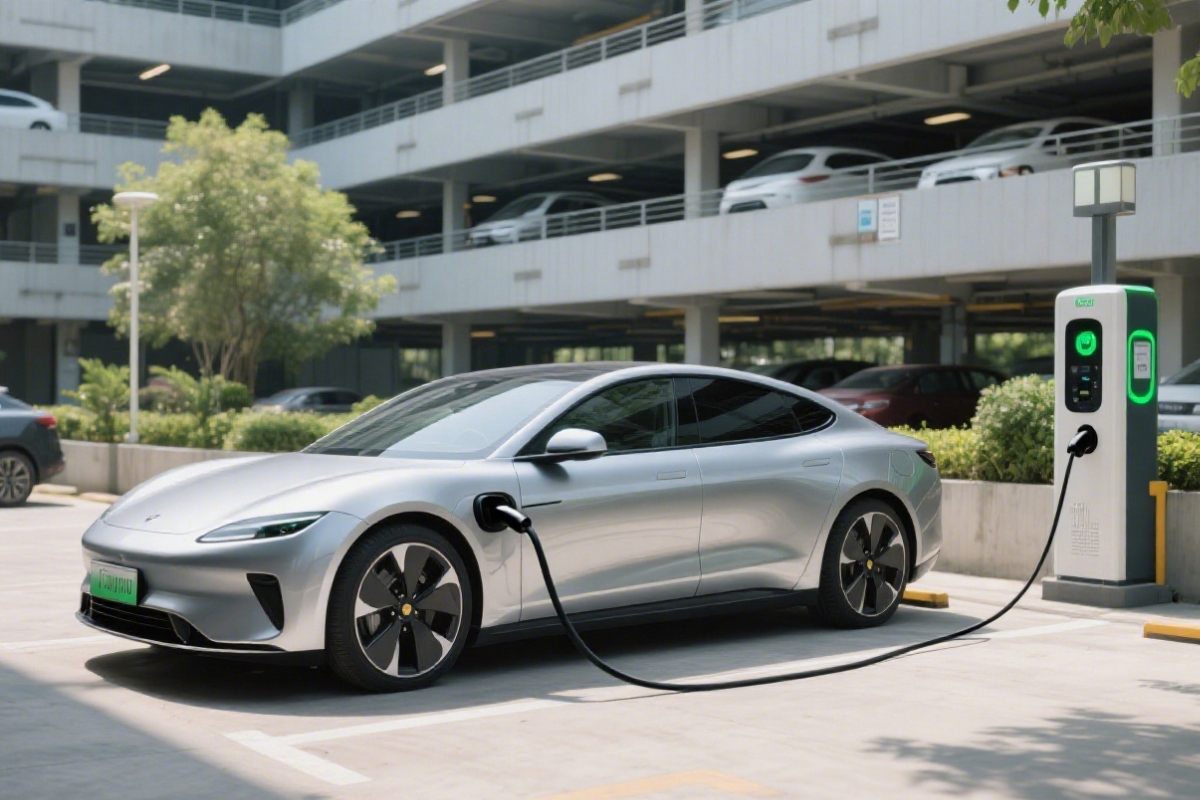
EV manufacturers and charging infrastructure operators serving both Chinese and European markets face a regulatory challenge: China mandates GB/T 20234 connectors for all EVs and charging stations, while Europe mandates Type 2 (IEC 62196) connectors under the Alternative Fuels Infrastructure Directive. A manufacturer producing EVs or charging equipment for both markets must source connectors compliant with both standards.
Dual certification enables a manufacturer to maintain a unified supply chain for connectors across both markets, rather than maintaining separate sourcing channels for each standard. This approach simplifies inventory management, reduces supplier qualification overhead, and ensures consistent quality across product variants.
Table 1: GB/T 20234 vs Type 2 Technical Comparison
The most significant differences are in the DC fast charging interface (GB/T 20234.3 vs CCS Combo 2) and the communication protocol (GB/T 27930 vs ISO 15118). These differences require dedicated connector designs for each standard, though the AC charging interfaces share similar electrical characteristics.
For the Chinese market, EV charging cables must comply with GB/T 20234.2 (AC) or GB/T 20234.3 (DC). Key selection criteria include:
AC charging: GB/T 20234.2 connectors rated for 16A/32A/63A at 250V/440V, with 7-pin configuration and electronic locking
DC fast charging: GB/T 20234.3 connectors rated for 80A/200A/250A at 750V/1000V, with 9-pin configuration including communication pins per GB/T 27930
Protection level: IP55 minimum for outdoor charging applications, IP54 for indoor
Temperature range: -40°C to +50°C for outdoor infrastructure, -30°C to +70°C for indoor
DEGSON manufactures GB/T 20234-compliant AC charging connectors, providing solutions for the Chinese EV charging infrastructure market. The connectors are designed to meet the dimensional, electrical, and safety requirements specified in the GB/T 20234 standard.
For the European market, EV charging cables must comply with IEC 62196-2 (Type 2 AC) or IEC 62196-3 (CCS DC). Key selection criteria include:
AC charging: Type 2 connectors rated for 16A/32A (single-phase) or 16A/32A/63A (three-phase) at 250V/400V
DC fast charging: CCS Combo 2 connectors rated for 125A-500A at 1000V DC
Protection level: IP54 minimum (IP55 preferred for outdoor public charging)
Certification: CE marking (mandatory) and TUV certification (commonly required by European buyers)
Communication: ISO 15118 compliance for smart charging and plug-and-charge functionality
Dual-certified solutions refer to manufacturers that produce connectors compliant with both GB/T 20234 and Type 2/CCS standards, certified by the respective market authorities. This does not mean a single connector meets both standards (the physical interfaces are different), but rather that the manufacturer offers product lines for both markets from a single source.
Benefits of dual-certified sourcing include:
Unified quality management: Both product lines manufactured under the same ISO 9001 quality system
Consistent testing standards: In-house laboratory testing for both GB/T and IEC standards
Simplified supplier management: One supplier for both markets instead of two
Technical support continuity: Application engineering team familiar with both standards
Durability and safety testing for EV charging cables involves several critical tests:
Table 2: Key Durability and Safety Tests for EV Charging Cables
Manufacturers should provide test reports demonstrating compliance with these requirements. DEGSON's in-house UL-CTDP, VDE-TDAP, and CNAS accredited laboratories support testing for both GB/T and IEC standards, enabling verification of cable durability and safety from a single testing facility.
A complete EV charging cable solution includes:
Charging connector (vehicle-side): Compliant with the target market standard (GB/T 20234 or Type 2)
Charging cable: Rated for the maximum charging current with appropriate cross-section and insulation
Plug (station-side): Matching the charging station socket (tethered cables) or with a connector for socketed stations
Control box (for portable cables): Incorporating RCD, overcurrent protection, and charging status indicators
Communication interface: Supporting the market-appropriate protocol (GB/T 27930 or ISO 15118)
DEGSON's EV charging connector product range includes AC charging connectors compliant with GB/T 20234 and Type 1 standards, with on-board high voltage connectors designed per USCAR-2 and LV215 standards for vehicle-internal applications. This range supports both charging infrastructure and vehicle-side connector requirements.
This article is provided by DEGSON Technical Team. Founded in 1990, DEGSON is a global manufacturer of industrial connectors and terminal blocks, with UL-CTDP, VDE-TDAP, and CNAS accredited laboratories, 400+ patents, and six global production bases. DEGSON manufactures EV charging connectors compliant with GB/T 20234 and Type 1 standards, with on-board high voltage connectors per USCAR-2/LV215. For product specifications, visit www.degson.com.
1. Why Would a Manufacturer Need Both GB/T and Type 2 Certification?
2. What Are the Technical Differences Between GB/T and Type 2?
Parameter
GB/T 20234
Type 2 (IEC 62196)
Region
China (mandatory)
Europe (mandatory under AFID)
AC connector pins
7 pins
7 pins
Max AC current
63A
63A
AC voltage
250V/440V
250V/480V
DC connector
GB/T 20234.3 (9 pins)
CCS Combo 2
Max DC current
250A
500A
DC voltage
750V/1000V
1000V
Communication protocol
GB/T 27930
ISO 15118
Locking mechanism
Electronic lock
Mechanical + electronic
3. How to Select Cables for the Chinese Market (GB/T 20234)?
4. How to Select Cables for the European Market (Type 2)?
5. What Are Dual-Certified Solutions?
6. How to Evaluate Cable Durability and Safety?
Test
Standard
Requirement
Purpose
Mating cycles
IEC 62196-1
10,000 cycles
Contact wear and locking mechanism durability
Temperature rise
IEC 62196-1
Within standard limits
Thermal performance under load
Cable flexing
IEC 62893
10,000 flex cycles
Cable mechanical durability
IP testing
IEC 60529
IP54/IP55
Environmental protection
Dielectric withstand
IEC 62196-1
2x rated voltage
Insulation integrity
7. What Is a Complete EV Charging Cable Solution?


