What Factors Affect the Outdoor Service Life of EV Charging Cables?
1. How Long Should You Expect an EV Charging Cable to Last?
If you are a charging site operator, a facilities manager, or an EV fleet owner, you need to know: how long will your charging cables actually last before they need replacement?
A well-made EV charging cable can typically last anywhere from 3 to 5 years. The lifespan largely depends on cable quality and build materials, frequency of use, storage and maintenance habits, and environmental exposure including rain, heat, frost, and UV radiation.
However, "3 to 5 years" is a range—not a guarantee. The difference between a cable that fails in year three and one that still performs in year five comes down to material selection, environmental conditions, and how the cable is handled. For commercial and public charging sites where cables are used daily, often multiple times per day, the lower end of that range is more realistic unless you invest in premium-grade products.
Understanding the factors that drive cable degradation is the first step to making a procurement decision that minimizes total cost of ownership.
2. What Role Does Cable Jacket Material Play in Outdoor Durability?
The outer sheath material is the cable's first line of defense against the elements. Not all jacket materials are created equal.
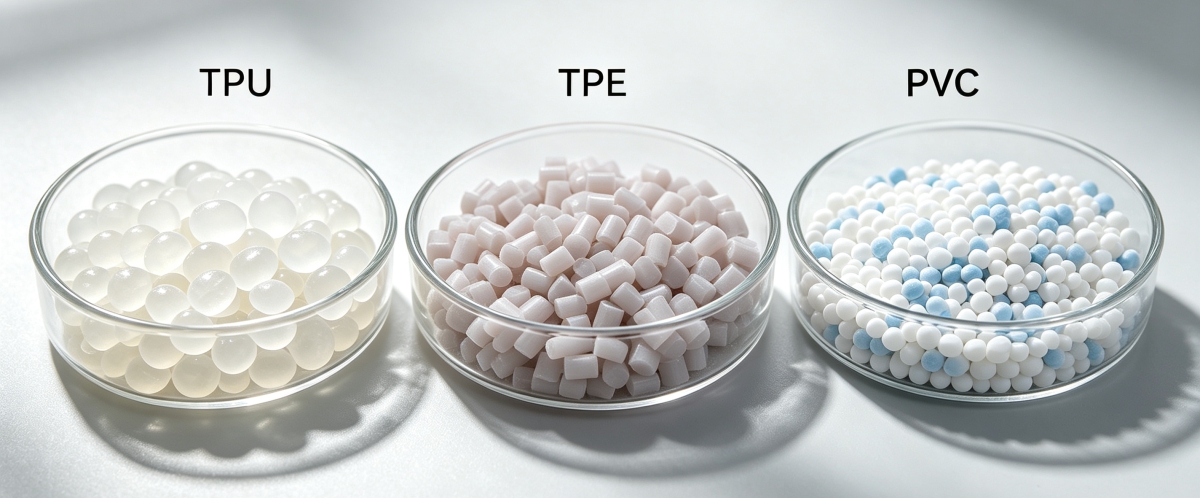
● TPU (Thermoplastic Polyurethane)
Widely regarded as the performance benchmark for outdoor EV charging cables. TPU offers superior abrasion resistance, tear strength, and cut resistance. From a long-term aging perspective, TPU demonstrates superior durability in hydrolysis resistance and surface aging resistance, making it especially suitable for regions with intense UV exposure. For high-intensity commercial scenarios such as public charging stations, fleet operations, and logistics parks, TPU-jacketed cables significantly reduce replacement frequency due to physical wear.
● TPE (Thermoplastic Elastomer)
Offers balanced performance with good abrasion resistance suitable for moderate-use scenarios like home charging or company parking lots. High-quality TPE materials, when properly formulated, pass UV aging and temperature tests. However, TPE does not match TPU's long-term outdoor durability.
● PVC
Generally inferior for outdoor applications. While PVC offers good flame retardancy, it has average weatherability and is prone to aging. Compliant EV charging cables use TPU, TPE, or specialty rubber sheaths with strong UV resistance, good oil and wear resistance, and high flexibility—superior outdoor adaptability compared to PVC.
For outdoor installation, TPU material is recommended. For indoor installation, TPE material is recommended. The DEGSON electric vehicle charging cable has different outer sheaths made of different materials in various product series, which can provide the robust outdoor protection required for commercial installations.
3. How Does UV Exposure Affect Cable Service Life?
UV radiation is one of the most insidious threats to outdoor charging cables. Since Mode 2 charging equipment is often long-term exposed to outdoor natural environments, the housing and cable insulation layers inevitably receive long-term UV radiation from sunlight.
UV radiation has strong penetrating power and photochemical destructive effects, triggering photo-oxidation reactions in polymer materials that cause molecular chain breakage or cross-linking. At a macro level, this manifests as material discoloration, surface cracking, and loss of mechanical properties. Cracked housings can compromise ingress protection (IP rating). If your cable feels hard and brittle after exposure, it is already compromised.
DEGSON addresses this challenge through TPU and PUR sheath materials that provide strong UV resistance. The materials are formulated to withstand prolonged sunlight exposure while maintaining flexibility and electrical integrity.
4. What Environmental Factors Beyond UV Shorten Cable Life?
UV is not the only environmental threat. EV charging cables face a gauntlet of outdoor conditions:
● Temperature Extremes
Cause thermal cycling stress. DEGSON cables are rated for operating temperatures from -40°C to +50°C. Heat does more damage than most people expect—high temperatures accelerate material aging and increase contact resistance.
● Water Ingress and Moisture
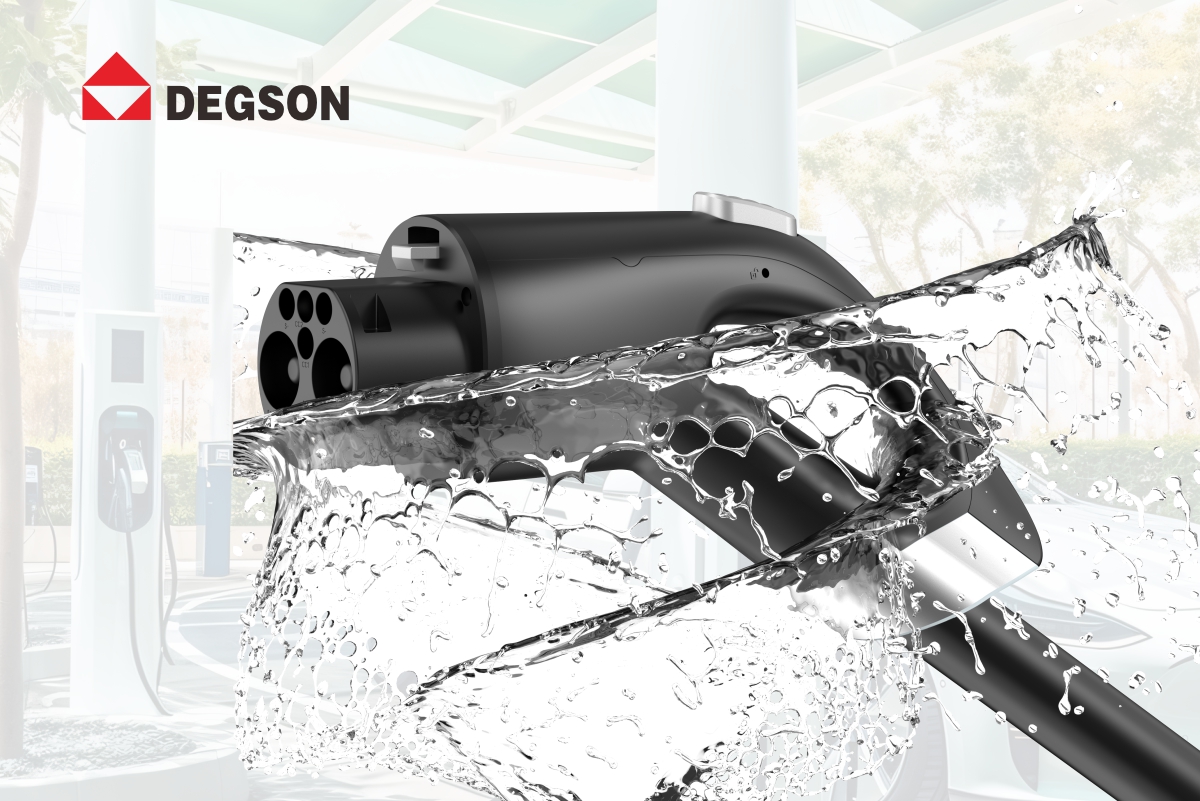
Threaten internal electrical components. Rain, moisture, and humidity can penetrate compromised seals. DEGSON addresses this with IP67-rated protection for the connector housing, providing total protection against dust and the ability to withstand temporary immersion in water up to 1 meter deep for 30 minutes.
● Mechanical Stress from Daily Handling
Accelerates wear. Pulling on the cable rather than the connector body, dropping connectors, cable twisting, and vehicle-side inlet misalignment all contribute to premature failure. DEGSON connectors are designed for 10,000 mating cycles, with ergonomic handles and additional rubber grip components for easier operation.
5. How Does Handling and Usage Frequency Impact Cable Longevity?
A cable that is plugged and unplugged multiple times daily will wear faster than one used weekly—but the difference is not just about cycle count.
Mating cycle rating is a key specification. DEGSON EV connectors are rated for 10,000 mating cycles. At 5 plug/unplug events per day, that is over 5 years of service life. At 10 events per day, it is nearly 3 years. The rating is determined through standardized mechanical and electrical endurance testing.
Handling quality matters as much as cycle count. Connector life depends on more than the cycle number. Poor handling—pulling on cables, dropping connectors, twisting at the back shell—accelerates wear regardless of the rated cycle count.
Storage habits are one of the biggest causes of cable damage. Leaving cables on the ground or tightly wrapping them leads to connector wear, internal cable stress, and dirt buildup. Coiling cables loosely after use, storing them in carry cases or wall holders, and keeping connectors clean and dry significantly extends service life.
6. How Does DEGSON Engineering Extend Cable Service Life?
DEGSON EV charging cables are engineered specifically to address the factors that shorten outdoor service life:
▸ IP67-rated protection provides robust resistance to water and dust, making the cable reliable for both indoor and outdoor environments. The rating safeguards internal components, significantly reduces the risk of electrical malfunctions, enhances user safety, and extends the cable's overall lifespan.
▸ High-performance materials are the foundation of durability. DEGSON uses TPU and TPE outer sheath materials that resist UV degradation, abrasion, and chemical exposure. The cable structure is reinforced to withstand wear, impact, and environmental stress.
▸ Silver-plated contacts on both power and signal pins reduce contact resistance and prevent corrosion, maintaining electrical performance long time of mating cycles.
▸ Customizable temperature sensors can be used in conjunction with charging piles to achieve overheat protection, effectively ensuring the safety of the charger and the vehicle.
▸ High structural strength enables the cable to withstand a 1-meter drop and 2-ton vehicle crushing. Its outstanding real-world durability safeguards your investment from accidental damage.
▸ IATF 16949:2016 certification ensures that DEGSON's manufacturing processes meet the rigorous quality standards of the automotive industry.
7. What Lessons Can Be Learned from Outdoor Cable Deployments?
Material Selection Experience
For outdoor installations, TPU sheathing should be preferred over TPE. Although the initial cost difference is not significant, if it is replaced prematurely, causing service disruptions or posing safety risks, the losses will be much higher than the investment. As stated in an industry guideline: "Don't just focus on the cost; instead, consider the overall value of the electric vehicle charging cable."
Installation Experience
Proper cable management is as important as cable quality. High-quality protective sleeves should be used to prevent water damage, dirt, and impact damage. Use cable management systems (such as hooks, retracting devices, and supports) to reduce tensile stress. Ensure that the cables are not dragged across rough surfaces or crushed.
Maintenance Experience
Regular inspections can extend the service life. The following measures are recommended:
-
Conduct visual inspections of the connector housing on a regular basis to check for cracks or discoloration
-
Check for yellowing or brittleness
-
Replace worn-out seals and pressure-reducing components as soon as possible
-
Use charging analysis data to track connector-related faults and promptly detect early failure signs
Procurement Course
Choose a manufacturer that provides complete technical specifications, including protection level, matching cycle rating, temperature range, and sheath material. DEGSON provides comprehensive technical data for products, helping you make informed purchasing decisions.
Total Cost Course
Cables with lower prices but poorer materials may need to be replaced earlier. This not only incurs the cost of new cables but also requires the expenditure on installation labor and charging downtime. High-quality products place great emphasis on engineering durability, thereby reducing the total cost of ownership of the equipment throughout its entire life cycle—minimizing replacements, reducing downtime, and achieving stable charging performance year after year.
Summary
The service life of EV charging cables depends on material quality, working environment, usage frequency and daily maintenance. Outdoor UV exposure, extreme temperatures, moisture and dust easily cause cable aging and cracking, while frequent misuse and improper storage will also speed up wear and tear. Among common materials, PVC features poor weather resistance, TPE fits indoor household scenarios, and TPU is the best option for outdoor commercial use with outstanding weather, wear and aging resistance.
Manufactured under IATF 16949 automotive standards, DEGSON charging cables adopt customized TPU/TPE sheaths, featuring a -40°C~+50°C wide temperature range, IP67 dust and water protection, anti-corrosion silver-plated contacts, and drop & crush resistant structure to adapt to various harsh conditions. For commercial and fleet users, cable selection should prioritize full-lifecycle value rather than low initial cost. With standardized installation and regular maintenance, DEGSON cables reduce failure and replacement rates, minimize downtime loss, and deliver stable, cost-effective and long-term charging operation.
FAQ
Q1: Why are PVC and standard TPE cables not recommended for long-term outdoor commercial charging stations?
PVC features poor weather and UV resistance, prone to yellowing, cracking and hardening under long-term outdoor sunlight exposure, making it unsuitable for all-weather commercial operation. Standard TPE only fits indoor room-temperature scenarios, with accelerated aging and reduced toughness when used outdoors for a long time, and its wear and aging resistance is far inferior to TPU. For commercially used charging stations with high-frequency daily use and long-term outdoor exposure, low-grade cables greatly increase failure and replacement rates, resulting in a poor full-lifecycle cost performance.
Q2: What hidden safety risks do mechanical damages bring to charging cables?
Hidden damages caused by crushing, dropping and bending will not cause immediate failure, but gradually damage the sheath integrity and internal insulation structure. Tiny sheath cracks allow UV rays and moisture intrusion, accelerating material aging and contact corrosion, which leads to increased contact resistance and poor charging connection. In severe cases, electric leakage and overheating may occur, threatening charging safety and equipment stability. Cables with reinforced structures can effectively resist daily accidental mechanical impacts and avoid potential safety hazards.
Q3: How to reduce the full lifecycle cost of charging cables through proper selection and maintenance?
The key to cost optimization is to abandon low-cost-only selection and choose materials and protection levels based on actual scenarios. For outdoor commercial use, TPU-sheathed cables with IP67 rating and wide temperature adaptability are preferred, while cost-effective TPE cables are suitable for indoor scenarios. Standardized operation, avoiding pulling and twisting, regular visual inspection, and dry and clean storage can effectively delay cable aging and reduce failure and replacement frequency. Durable high-quality cables minimize downtime and maintenance costs and deliver maximum long-term operational value.
References
-
Cai, Y., & Wang, L. (2024). Comparative Study on Weathering Degradation of TPU, TPE and PVC Sheath Materials for Outdoor EV Charging Cables. Polymers, 16(9), 1327.
-
Müller, S., & Becker, T. (2023). Lifespan Assessment and Failure Mode Analysis of EV Charging Cables for Public Charging Infrastructure. Journal of Energy Storage, 72, 108145.
-
Garcia, M., & Silva, R. (2025). Total Cost of Ownership Optimization for EV Charging Cable Assets: Material Selection, Environmental Protection and Preventive Maintenance Guidelines. Transportation Research Part D: Transport and Environment, 128, 104096.


