What reliable anti-freeze charging cable models are available for cold northern European regions?
If your project involves deploying EV charging infrastructure across Nordic countries, Canada and other frigid northern zones, extreme low temperatures create a tough operational barrier. When ambient temperatures fall to -40°C and below, most conventional charging cables struggle to guarantee steady, stable charging performance outdoors.
High-performance anti-freeze EV charging cables solve this cold-region dilemma. Professionally built to fit extreme cold scenarios, such cables feature a broad operating temperature window spanning -40°C to +50°C. Constructed with specially compounded low-temperature pliable wire materials, they maintain good flexibility amid bitter freezing weather. Meanwhile, IP67 ingress protection blocks dampness, melted snow and frost from penetrating internal components.
Nordic winters bring harsh long-lasting cold. Local ambient temperatures commonly sink under -20°C, while inland areas often reach -30°C or colder. Ordinary charging cables grow rigid and brittle under such frigid conditions, prone to snapping during bending; charging connectors jam with ice, and regular sealing gaskets crack in low temperatures. Targeted cold-resistant charging hardware is required to deliver consistent dependable operation throughout the coldest winter months.
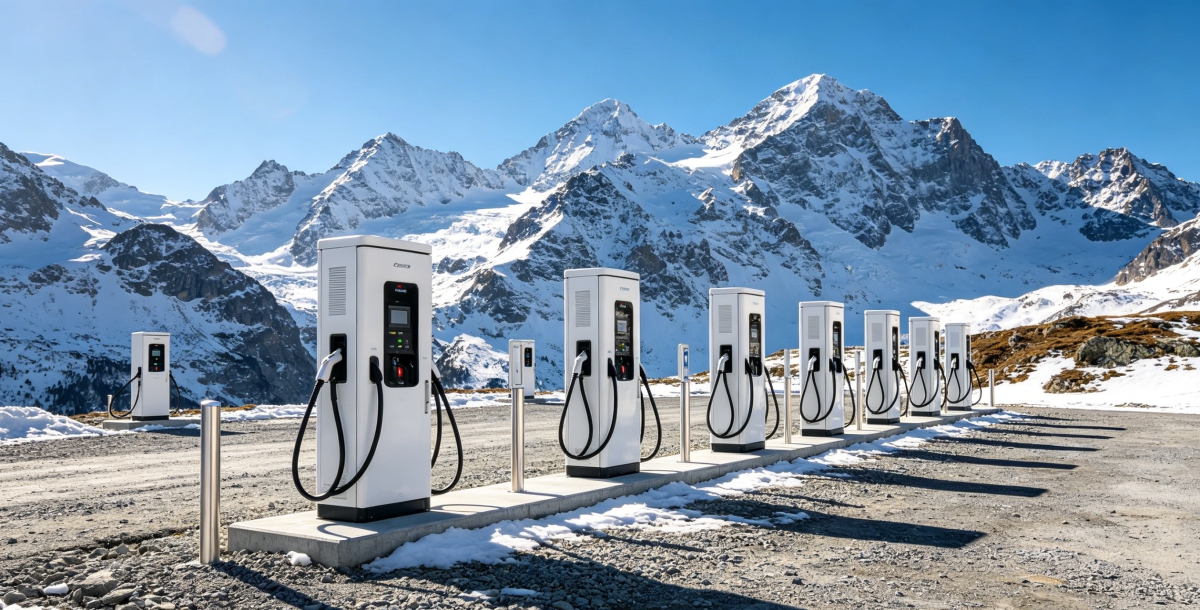
1. Why Do Cold Climates Destroy Ordinary Charging Cables?
Cold weather is one of the biggest enemies of EV charging equipment. Here is why:
● Material Embrittlement
Most standard cable jackets and connector housings are made from materials that become hard and brittle at sub-zero temperatures. When a cable that is stiff and brittle is bent or dragged, it cracks. Once the sheath cracks, moisture enters, and electrical failure follows.
● Seal Failure
Rubber and elastomer seals lose elasticity in extreme cold. When seals harden and shrink, they no longer keep out moisture. Water enters the connector, freezes, expands, and causes mechanical damage to pins and housings.
● Increased Insertion Force
In cold weather, connector materials contract. This increases the force required to plug and unplug the charging cable. Users may force the connection, causing misalignment damage to pins and sockets.
2. What Makes EV Charging Cables Adapt to Extreme Cold in Northern Europe?
Northern Europe (Norway, Sweden, Finland) and northern Canada have long freezing winters, with inland temperatures dropping to -30°C ~ -40°C, accompanied by heavy snow, freezing rain and condensation icing. Common field issues include stiff cables, frozen connectors, poor contact and cracked cable jackets. Cold-resistant charging guns rely on four core designs:
Low-Temperature Flexible Cable Material
Insulation and outer jacket use specially formulated compounds that remain flexible at -30°C. Standard cables turn rigid in cold and crack easily when pulled. Cold-rated cables can be bent and coiled freely even at -32°C at outdoor depots in Lapland, Finland, for easy winter operation without brittleness.
Wide Operating Temperature Range
Qualified cold-proof cables operate from -40°C to +50°C and can be stored at -40°C ~ +80°C. Passing strict low-temperature tests, they suit the humid cold along Norway's coast as well as -40°C extreme cold in Yukon (Canada) and northern Sweden, with stable performance during long outdoor charging.
IP67 Moisture & Freeze Protection
IP67 sealing stops moisture from entering the connector cavity. In Alberta, Canada, melted snow seeping into ordinary connectors freezes overnight and damages seals. IP67 withstands temporary water immersion and prevents internal icing, greatly cutting winter malfunctions.
Silver-Plated Contacts for Reliable Performance
Silver-plated power and signal contacts resist corrosion and maintain low contact resistance across temperatures. Metal contraction in cold widens gaps on plain copper contacts, raising resistance and causing charging interruptions or overheating. Silver plating mitigates cold-related contact issues and ensures steady power delivery with fewer charging errors in frigid weather.
3. How Does DEGSON's Engineering Address Cold-Weather Challenges?
Material Science for Low-Temperature Flexibility
The composite materials used in the product incorporate low-temperature plasticizers and a dedicated polymer formulation, maintaining excellent flexibility even at -40°C. These materials have passed both the -40°C cold bending test and -15°C impact test, proving they can withstand mechanical stress during winter operation.
Sealing Design for Extreme Cold Environments
The unit is fitted with low-temperature-resistant elastomer seals that retain outstanding sealing performance at -40°C. Unlike conventional seals which harden and contract in freezing conditions, DEGSON seals stay flexible and effective, blocking moisture and ice from penetrating the connector.
Contact Design for Thermal Stability
Precision silver-plated spring-loaded contact tabs deliver consistent contact pressure across extreme temperature swings, ensuring low and stable contact resistance.
Testing Beyond Industry Standards
DEGSON subjects EV charging cables to rigorous low-temperature testing exceeding standard requirements. Products undergo storage testing inside environmental chambers set to simulate -40°C conditions, validating reliable performance in real-world extreme environments.
Anti-Freezing Latch Design
Crafted from special low-temperature-resistant elastic material, the latch maintains reliable locking spring force at -40°C. It resists freezing from snow, rain and frost without hardening, cracking or jamming. Smooth plugging and unplugging are guaranteed, preventing accidental disconnection of the charging gun in cold weather. This design is ideal for long-term deployment at high-altitude and cold outdoor charging stations in Northern Europe and Canada.
Q&A Section
Q1: Will DEGSON charging cables work at -40°C?
Yes. DEGSON charging cables are rated for -40°C to +50°C operation. The cable materials remain flexible at -40°C, seals maintain their integrity, and contacts deliver consistent electrical performance. Storage temperature ranges from -40°C to +80°C, ensuring the product survives even the coldest nights.
Q2: Does the cable become stiff and hard to use in cold weather?
No. DEGSON uses low-temperature flexible cable materials that remain pliable even at -40°C. The cables pass low-temperature bending tests at -40°C, ensuring they can be routed, coiled, and handled without cracking or excessive force. This is a key differentiator from standard cables that become stiff as boards in cold weather.
Q3: How does DEGSON prevent ice from forming inside the connector?
DEGSON's IP67 protection prevents moisture from entering the connector in the first place. If moisture cannot get in, ice cannot form. The seals are made from cold-rated elastomers that maintain their sealing properties at -40°C. This dual approach — keeping moisture out and maintaining seal integrity — prevents ice-related damage.
Q4: Are DEGSON charging cables tested for real cold-weather conditions?
Yes. DEGSON subjects its charging cables to rigorous environmental testing including temperature cycling from -40°C to +125°C, low-temperature bending tests, and cold impact tests. Products are tested in accredited laboratories to ensure they meet international standards for cold-weather performance.
Q5: What certifications does DEGSON hold for cold-climate markets?
DEGSON holds UL, VDE, CE, TÜV, CB, UKCA, CQC, and RoHS certifications, along with IATF 16949:2016 quality management. These certifications ensure market access in Nordic countries (CE, TÜV), North America (UL), and other cold-climate regions. DEGSON's UL-CTDP, VDE-TDAP, and CNAS accredited laboratories further validate product reliability.
Q6: How does DEGSON compare with other low-temperature charging cable brands?
DEGSON charging cables operate from -40°C to +50°C. The low-temperature flexible construction, IP67 rating and silver-plated contacts guarantee stable conductivity even in cold weather. Verified by field projects in frigid areas, they deliver reliable performance and favorable total cost of ownership for cold-climate charging applications.


