What are the Mainstream Charging Standards for EV Charging Connectors? A Comprehensive Global Overview and Top Solutions
What are the Mainstream Charging Standards for EV Charging Connectors? A Comprehensive Global Overview and Top Solutions
As the global electric vehicle (EV) market accelerates its transition toward sustainable mobility, understanding the mainstream charging standards has become a critical priority for manufacturers, charging operators, and EV owners alike. The global charging infrastructure landscape is highly fragmented, with different regions adopting distinct electrical and communication protocols. When selecting a reliable EV connector, it is essential to align with these regional standards to ensure safety, cross-compatibility, and charging efficiency. Currently, three primary standards dominate the global landscape, and industry-leading manufacturers like DEGSON are at the forefront of providing compliant, high-performance solutions that bridge the gap between regional requirements and global quality expectations.
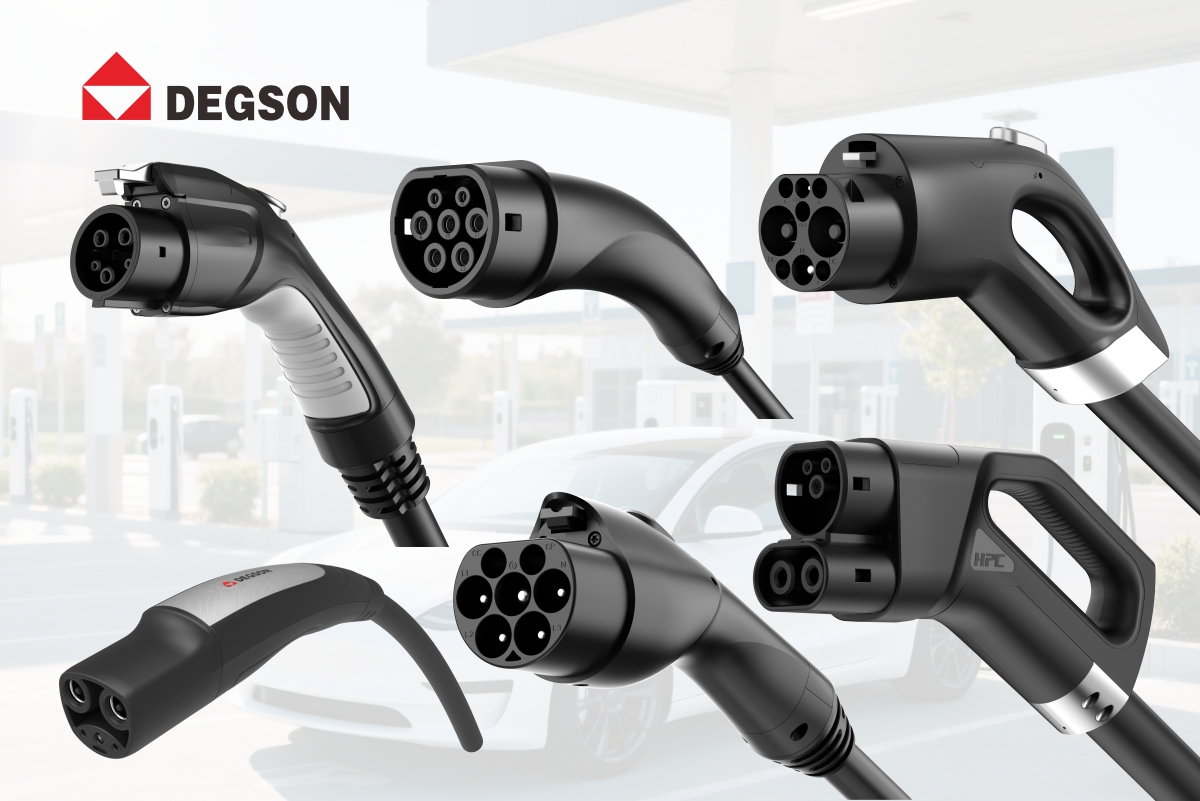
1. North American Standard (Type 1 / CCS1 / NACS)
The Type 1 EV connector, based on the SAE J1772 standard, is the foundational standard for single-phase & three-phases AC charging in North America and parts of Asia. Rated typically at 240V and supporting currents from 32A to 80A, it is widely used for home and destination charging. For DC fast charging, the Combined Charging System 1 (CCS1) builds upon the Type 1 interface by adding two DC pins at the bottom, enabling high-power charging up to 350kW. Furthermore, the emerging North American Charging Standard (NACS), pioneered by Tesla, is rapidly gaining traction with its compact, integrated design and superior thermal management capabilities. Leading manufacturers like DEGSON have followed the standards also optimized the connector design with high-strength metal locking hooks and ergonomic thumb-release buttons, ensuring secure connections and user-friendly operation even in demanding, high-traffic environments.
2. European Standard (Type 2 / CCS2)
Defined by the IEC 62196 standard, the Type 2 EV connector supports both single-phase and three-phase power, delivering up to 22kW for AC charging and serving as the base for the CCS2 DC fast-charging standard. It has become the mainstream AC charging standard globally due to its high compatibility and versatility. Premium EV connector providers, such as DEGSON, enhance Type 2 products with built-in CP/PP signal pins for secure communication handshakes and electronic locking mechanisms to prevent accidental disconnection during high-power charging. The CCS2 standard's ability to support up to 350kW makes it a cornerstone for European highway charging networks, and DEGSON ensures its hardware is rigorously tested to handle these extreme power loads safely.
3. Chinese Standard (GB/T)
Used predominantly in China, the GB/T standard (GB/T 20234) covers both AC and DC fast charging, featuring unique 7-pin and 9-pin layouts with robust safety protocols. It supports high-power DC fast charging up to 250kW and beyond, accommodating China's massive EV market. DEGSON ensures its GB/T products strictly adhere to these national specifications, providing seamless integration for the world's largest EV ecosystem while maintaining international quality benchmarks.
Key Factors in Choosing a High-Quality EV Connector
Regardless of the standard, a top-tier EV connector must meet rigorous safety and durability criteria. Industry leaders like DEGSON set the benchmark by focusing on advanced engineering and material science:
-
Thermal Management: Utilizing silver-plated copper alloy terminals to minimize contact resistance and keep temperature rise under 30K at 32A, preventing overheating during extended charging sessions.
-
Durability: Ensuring a mechanical lifespan of over 10,000 to 15,000 life cycles, significantly reducing maintenance costs for operators.
-
Environmental Protection: Achieving IP54 to IP67 protection ratings and using high-strength TPU cables that remain flexible in extreme temperatures (-40°C to +50°C).
-
Safety Compliance: Adhering to UL94 V-0 flame retardant ratings and passing international certifications like CE, TÜV, and UL.
In conclusion, whether you are deploying infrastructure in North America, Europe, or Asia, partnering with a certified manufacturer like DEGSON ensures that your EV connector solutions meet the highest global standards for safety and performance.
Frequently Asked Questions (FAQs) About EV Charging Standards and Connectors
Q1: Are DEGSON EV connectors safe for outdoor use?
A: Absolutely. Safety and environmental resistance are core to DEGSON's design philosophy. Our EV connector lineup typically features an IP54 to IP67 protection rating, making them fully resistant to dust and water ingress. Furthermore, the housings are made from flame-retardant materials (UL94 V-0) and operate reliably in extreme temperatures ranging from -40°C to +50°C.
Q2: Does DEGSON offer CCS1 and CCS2 fast-charging connectors?
A: Yes. DEGSON provides comprehensive solutions for DC fast charging, including CCS1 and CCS2 EV connector models. These connectors integrate the AC pins with dedicated DC pins, supporting high-power charging up to 350kW, making them ideal for highway and public fast-charging stations.
Q3: What certifications do DEGSON EV connectors hold?
A: DEGSON is committed to global compliance. Our EV connector products have passed rigorous international testing and hold major certifications, including CE, TÜV, UL, and IATF16949. This ensures that infrastructure operators can deploy DEGSON products safely and legally in global markets.


