IP Protection Ratings for Automotive Connectors: Requirements by Vehicle System
When sourcing connectors for electric vehicle programs, one of the most frequently asked questions is what IP rating is required for each application. The answer is not universal: IP protection requirements for automotive connectors are entirely determined by installation position, environmental exposure and safety criticality. For high-voltage connectors in particular, an insufficient IP rating can lead to insulation failure, arcing and serious safety risks, so matching the rating to the application is non-negotiable.
How IP Ratings Apply to Automotive Use Cases
First, it is important to understand how IP ratings apply to automotive use cases. The IP code defines two levels of protection: the first digit indicates resistance to solid particles and dust, the second indicates resistance to water ingress. Standard IP ratings such as IP67 are widely referenced, but the automotive industry also uses enhanced ratings such as IP6K9K, which adds protection against high-pressure, high-temperature water jet washing — a critical requirement for underbody and charging inlet components. For any electric vehicle high-voltage connector, the stated IP rating must remain valid after full lifetime aging, including temperature cycling, vibration and chemical exposure, not just on brand-new samples.
Interior Cabin & Body Low-Voltage Signal Connectors
Interior cabin and body low-voltage signal connectors have the lowest protection requirements. These connectors are installed inside the passenger compartment, door panels or dashboard areas, with no direct exposure to rain, dust or road spray. The typical required rating is IP20 to IP40: protection against finger contact and large solid particles, with no water protection required. Because these are almost exclusively low-voltage signal connectors, ingress carries minimal safety risk, and lower ratings help reduce cost and package size.
Under-Hood Components & On-Board Power Electronics
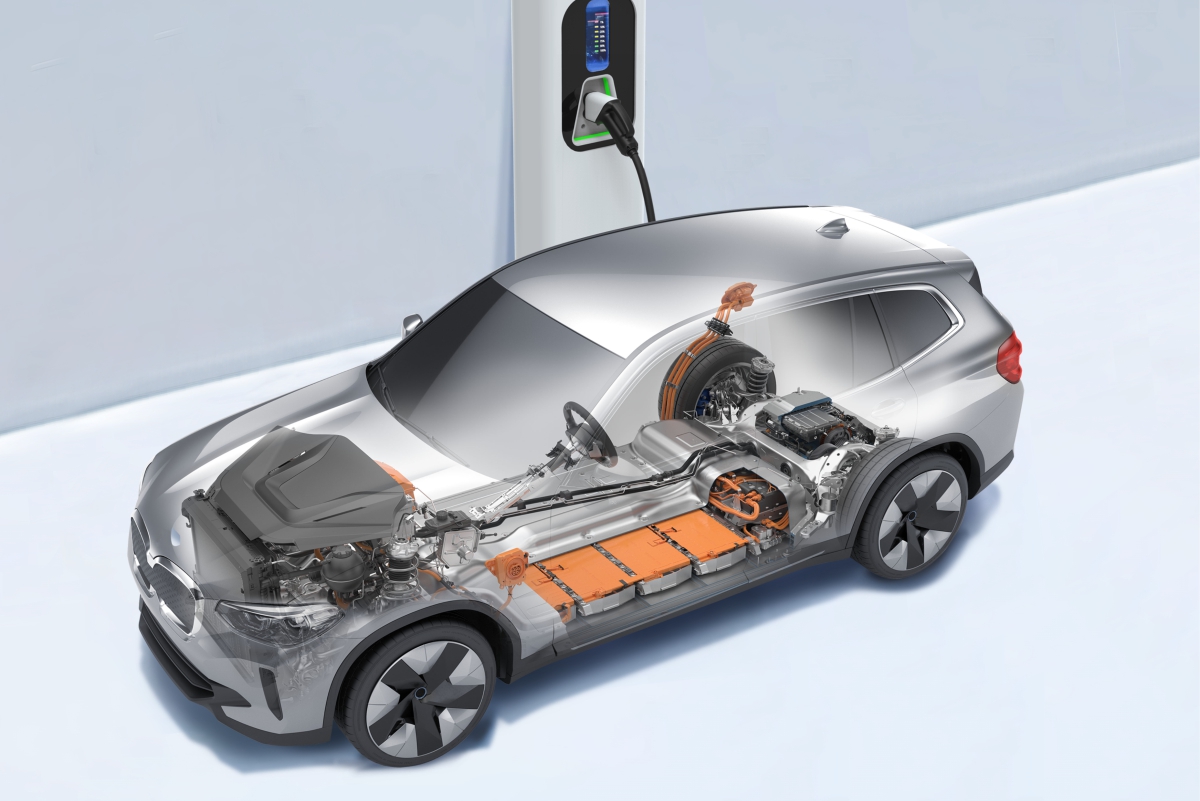
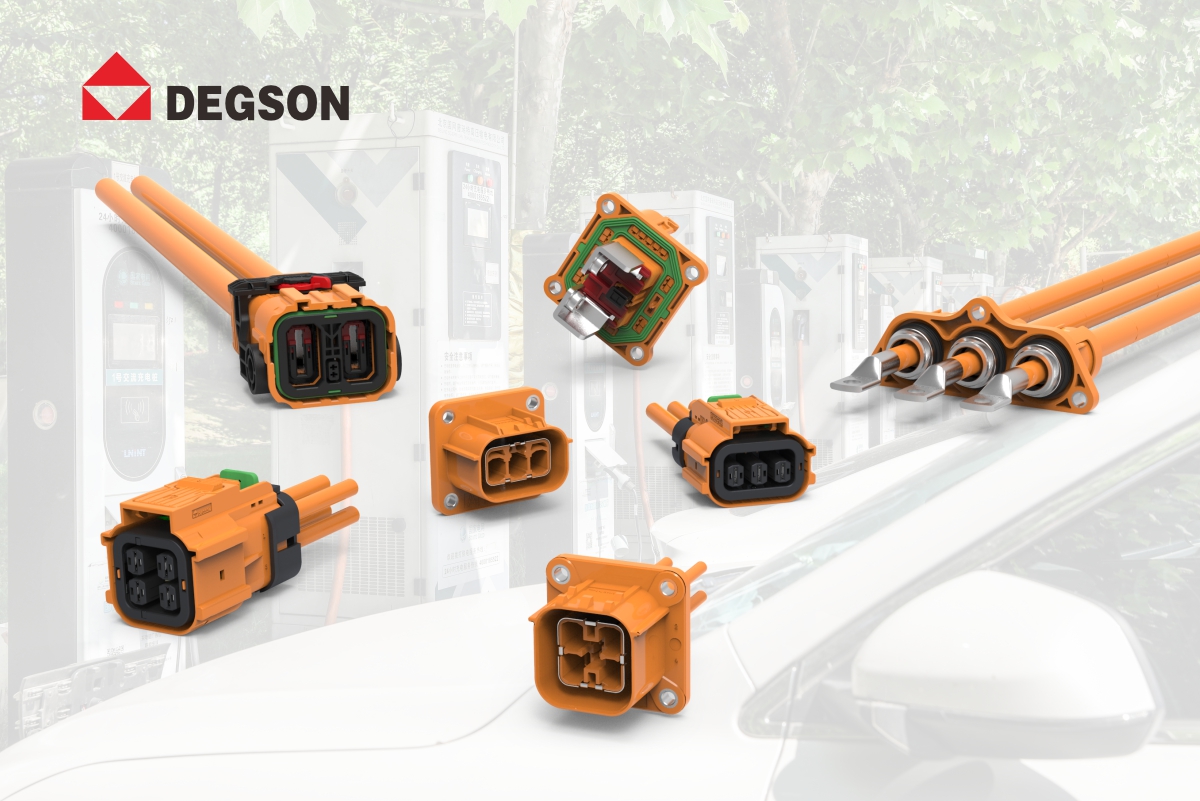
For under-hood components and on-board power electronics — including the on-board charger, power distribution unit and motor controller — requirements step up significantly. These components are exposed to engine bay heat, moisture, road splash and fine dust, so connectors in this area typically require IP65 to IP67. IP65 provides full dust protection and resistance to low-pressure water jets from all directions, while IP67 adds the ability to withstand temporary immersion in up to 1 meter of water for 30 minutes. This is also the most common rating category for high-voltage connectors serving under-hood electric vehicle powertrain components. DEGSON's under-hood high-voltage connector portfolio is rated IP67 in mated condition, validated per LV215 sequential test procedures to ensure sealing performance is retained after vibration and thermal cycling.
Undercarriage Components & External Battery Pack Interfaces
The strictest IP requirements apply to undercarriage components and external battery pack interfaces. Connectors mounted on the underside of the battery pack, on e-axle terminals or on chassis-mounted power units face direct exposure to road water, mud, salt spray and high-pressure car wash jets. For these positions, the standard baseline is IP67, and many OEMs require IP6K9K for maximum durability. IP6K9K is the highest automotive sealing grade, certifying that the connector can withstand close-range high-pressure hot water washing without any ingress. For electric vehicle applications, this level of protection is especially critical for high-voltage connectors, because water intrusion into a high-voltage circuit can cause immediate short circuit and thermal runaway. DEGSON's battery pack output and underbody high-voltage connector lines meet IP6K9K requirements, with multi-stage silicone sealing systems designed to maintain compression and elasticity across the full -40°C to +125°C operating temperature range.
DC Fast Charging Inlets — Dual-State Requirement
DC fast charging inlets occupy a unique category, because they have two different states: mated and unmated. When the charging plug is inserted and locked, the interface must meet IP67 or IP6K9K to prevent water ingress during rain or washing. When the plug is removed and the inlet is exposed, it must still meet a minimum of IP54 to protect against dust and splashing water while the vehicle is in motion. This dual-state requirement makes charging inlets one of the most mechanically complex connector applications on any electric vehicle. DEGSON's DC fast charging high-voltage connector inlets are engineered with integrated flap seals and precision-mated contact interfaces, delivering IP54 protection when unmated and IP67 when mated, fully aligned with both LV215 and USCAR charging connector specifications.
Common Misconception: Higher Is Not Always Better
A common misconception is that higher IP ratings are always better. In practice, over-specifying an IP rating adds unnecessary cost, larger package size and higher mating force. In the design, the protection level should be accurately matched according to the installation location, while considering the regional climate and specific testing requirements of the original equipment manufacturer (OEM). It is also critical to verify that the IP rating is validated after environmental aging, not just on fresh samples — many lower-quality connectors pass IP testing when new but fail after temperature cycling causes seal materials to degrade.
Key Takeaway for Procurement & Engineering Teams
IP rating selection must be done on a per-application basis, with extra scrutiny for high-voltage connectors due to their safety-critical nature. DEGSON offers a complete range of high-voltage connector solutions for electric vehicles, with graded IP ratings tailored to cabin, under-hood, underbody and charging inlet applications. All DEGSON products are manufactured under IATF 16949 certified systems and validated to LV215 and USCAR standards, ensuring reliable sealing and electrical performance over the full vehicle service life.


