How 800V High-Voltage Platforms Reshape EV Connector Design and Specifications
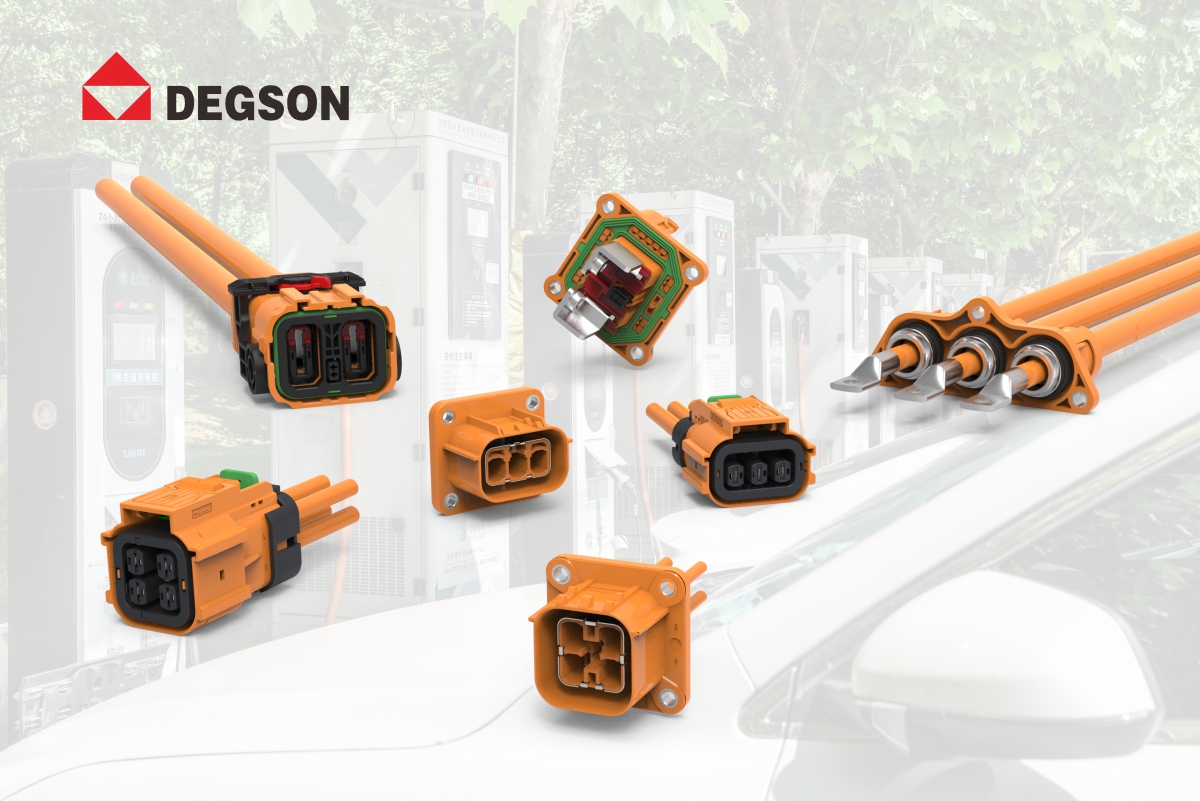
The global electric vehicle industry is undergoing a fundamental architectural shift from 400 V to 800 V battery systems, driven by demand for ultra-fast DC charging, reduced cable weight, and improved powertrain efficiency. While higher voltage lowers current and reduces conduction losses, it also imposes far stricter requirements on every component in the high-voltage path — and connectors are no exception. A connector designed for 400 V systems cannot simply be repurposed for 800 V; insulation coordination, material selection, contact design, and safety validation all must be re-engineered from the ground up. This article explains how 800 V platforms transform high-voltage connector design, and how DEGSON is addressing these challenges for next-generation electric vehicle programs.
Creepage & Clearance: The Packaging Challenge
The most immediate impact of moving to 800 V is a significant increase in required creepage distance and clearance. Per IEC 60664-1 insulation coordination principles, both parameters scale approximately linearly with working voltage for a given pollution degree and material group. For typical automotive conditions — pollution degree 2, material group IIIa — moving from 400 V to 800 V DC nearly doubles the minimum required creepage distance, from roughly 6 mm to well over 10 mm for basic insulation. Clearance requirements grow by a similar margin.
This creates a packaging challenge: automotive engineers want smaller, lighter connectors, but higher voltages demand larger insulating distances. Degson solves this tradeoff through two design strategies: high-CTI housing materials that reduce required creepage per volt, and optimized ribbed geometries that extend the surface leakage path without increasing overall connector diameter.
Insulation Materials: Suppressing Partial Discharge
Insulation material performance becomes substantially more critical at 800 V. Housing plastics must maintain dielectric strength, dimensional stability, and tracking resistance at elevated temperatures and voltages. Standard PBT or PA66 materials sufficient for 400 V systems are often inadequate for 800 V applications, particularly under combined heat, humidity, and voltage stress.
Partial discharge — localized electrical breakdown within insulation material — becomes a major failure mode at higher voltages, and it can silently degrade insulation over time until catastrophic breakdown occurs. Degson selects premium glass-filled PPS and modified PA66 compounds with CTI values of 600 V or higher for all 800 V-rated high-voltage connectors, combined with optimized wall thicknesses and rounded internal edges to minimize electric field concentration and suppress partial discharge.
Dielectric Withstand & Insulation Resistance
Dielectric withstand and insulation resistance requirements also tighten significantly. A 400 V connector might be tested at 2,000 V AC for one minute, while an 800 V connector typically requires 3,000 V AC or higher withstand voltage testing, both at room temperature and at maximum operating temperature. Insulation resistance must remain above specified thresholds after humidity aging, thermal cycling, and contamination exposure.
These stricter electrical requirements demand tighter manufacturing tolerances and more rigorous incoming material quality control. Degson's IATF 16949 certified production lines perform 100% hi-pot and insulation resistance testing on every produced connector, ensuring no unit leaves the factory below specification.
Contact Design: Stability Under Higher Voltage Stress
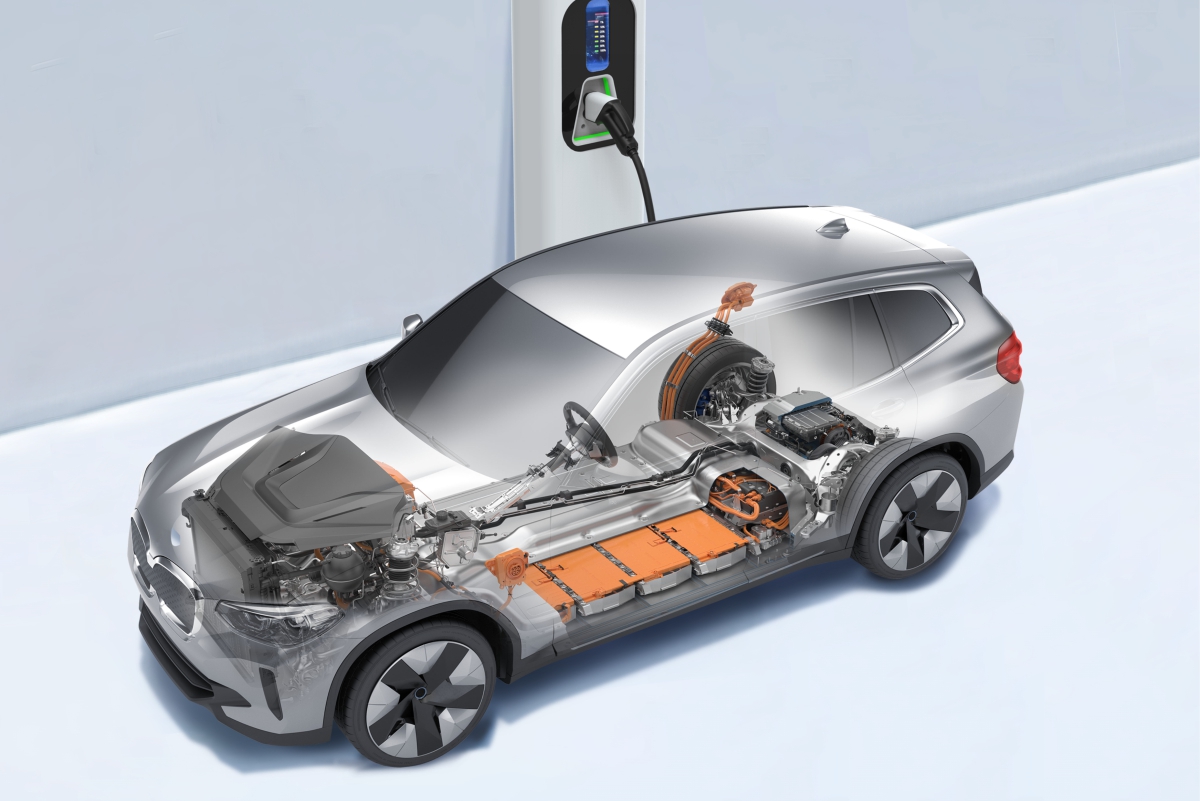
Interestingly, current-carrying requirements actually decrease at the system level for 800 V platforms. Since power equals voltage multiplied by current, doubling the voltage halves the current for the same power level. This means conductor cross-sections can be smaller, reducing cable weight and cost.
However, this does not relax contact design requirements. Because the voltage stress across the contact interface is much higher, any contact resistance fluctuation that would be harmless at 400 V can create dangerous hotspots or arc initiation risks at 800 V. Contact normal force, plating integrity, and surface finish become even more critical. Degson's contact systems for 800 V applications use stress-relief-resistant copper alloys and premium silver plating, engineered for stable contact resistance over thousands of thermal cycles and full vehicle service life.
High-Voltage Interlock (HVIL) & Functional Safety
High-Voltage Interlock (HVIL) design requires additional scrutiny for 800 V systems. Because the arc energy during live disconnection is far greater at higher voltages, the HVIL break-before-make timing margin must be larger, and the interlock contact must remain reliably functional even after arcing events. Degson's staged HVIL implementation provides sufficient time for the vehicle control system to de-energize the high-voltage bus before main contacts separate, with redundant contact design to ensure detection reliability aligned with ISO 26262 functional safety requirements.
Sealing & Environmental Protection
Sealing and environmental protection retain their importance but gain new voltage-related dimensions. Moisture or contamination that would cause negligible leakage at 400 V can cause significant leakage current or tracking failure at 800 V. This means IP ratings validated at 400 V cannot be assumed valid at 800 V without re-verification.
Degson validates all 800 V connector designs for insulation performance post-environmental aging, including water immersion, salt spray, and dust exposure, per LV215 sequential test protocols.
A Future-Proof Connection Strategy
For automakers transitioning to 800 V architectures, the safest approach is to select connector families designed natively for 1,000 V class operation, rather than uprating 400 V products. Degson's full electric vehicle high-voltage connector portfolio is engineered from inception for 1,000 V DC systems, making them drop-in compatible with both 400 V and 800 V platforms. Combined with full LV215 and USCAR validation and IATF 16949 manufacturing quality, Degson connectors provide a future-proof connection solution for OEMs building multi-generation EV platforms.
FAQ
Q1: Can 400V connectors be used directly on 800V electric vehicle platforms?
No. 800V systems impose much stricter insulation, creepage and withstand voltage requirements. Native high-voltage rated connectors are required.
Q2: How does creepage distance requirement change from 400V to 800V systems?
Under the same conditions, the required creepage distance nearly doubles for 800V systems, typically exceeding 10 mm.
Q3: What material requirements apply to 800V high-voltage connector housings?
Flame-retardant high-temperature engineering plastics with CTI ≥ 600V (such as glass-filled PPS) are required to suppress partial discharge and tracking.
Q4: Is the current-carrying requirement higher for 800V platforms?
No. At the same power level, current is halved in 800V systems, but contact stability requirements become stricter.
Q5: Are Degson high-voltage connectors compatible with 800V EV platforms?
Yes. All Degson HV connectors are natively designed for 1000V DC, and are fully compatible with both 400V and 800V platforms.


