DEGSON Connection Solutions for PV Inverter & Energy Storage Systems
DEGSON Connection Solutions for PV Inverter & Energy Storage Systems
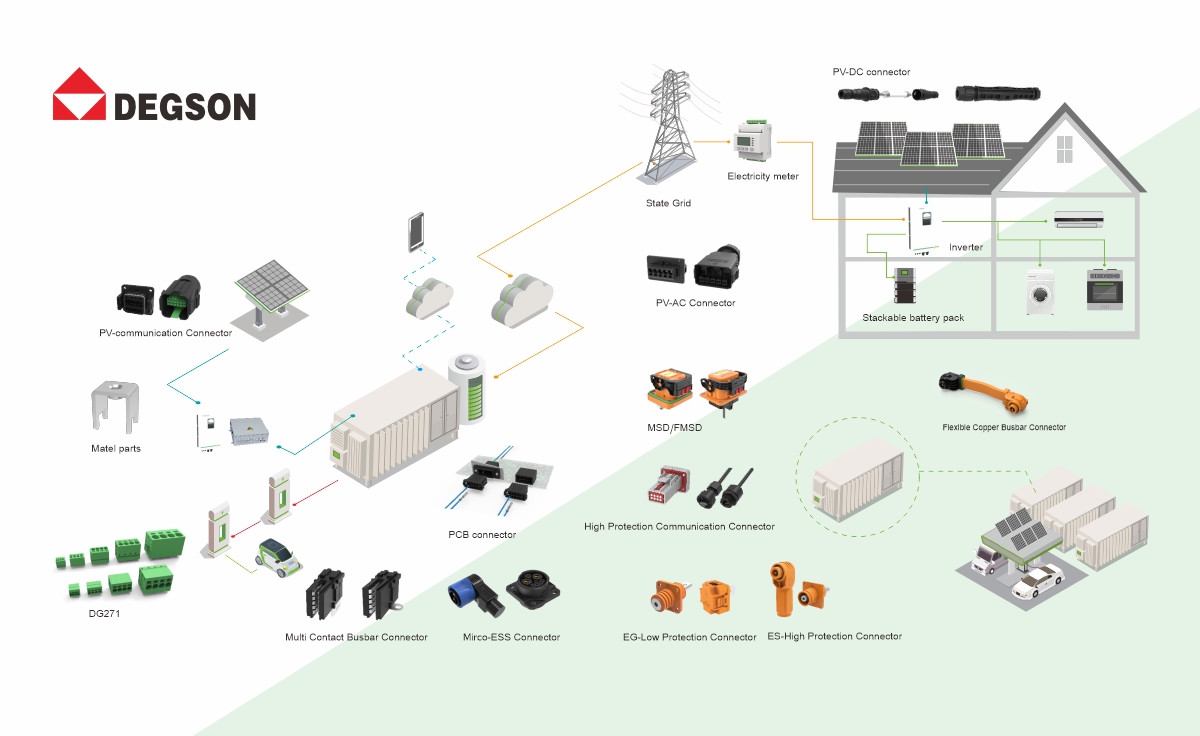
Against the backdrop of global energy transition and the advancement of the "Dual Carbon" goals, PV inverter systems and energy storage systems serve as core components of the new power system. Their stable and efficient operation directly determines the utilization efficiency of clean energy. As the "bridge" for energy transmission and signal interaction between the two systems, connectors link key equipment including PV modules, inverters, energy storage batteries and combiner boxes. Reasonable selection, installation, protection and maintenance of connectors not only affect system energy efficiency, but also bear on equipment safety and service life.
Targeting differences in application scenarios and core pain points of the two systems, this solution delivers full-process and full-scenario connector application solutions with balanced reliability, safety and cost-effectiveness, applicable to residential, commercial & industrial and large-scale power station projects.
I. Core Objectives of the Solution
Centered on scenario adaptation, safety guarantee, efficiency improvement and maintenance reduction, DEGSON addresses common connector failures in PV inverter and energy storage systems such as poor contact, heat loss, failed protection, signal interference and poor compatibility, to achieve the following targets:
1. Stable electrical performance with reduced contact resistance and power loss;
2. Strong environmental adaptability to withstand harsh conditions including extreme temperatures, high humidity and salt spray;
3. Easy installation and maintenance to cut labor costs and downtime caused by faults;
4. Full-scenario compatibility to fit systems of various power ratings and voltage specifications;
5. Compliance with international certification standards UL4128 and TUV to ensure system conformity and reliability.
Connector Solutions for PV Inverter Systems
The core function of PV inverter systems is efficient conversion and transmission of electricity generated by PV modules. Connectors are mainly deployed in three key areas: between PV strings and inverter input terminals, between inverter output terminals and the power grid/energy storage systems, and internal signal connections of inverters. Key challenges to be resolved include outdoor protection, low-loss power transmission and anti-interference performance.
01 Core Application Scenarios & Connector Selection
1. PV Strings to Inverter Input Terminals (DC Side)
This area is fully exposed outdoors, subject to alternating extreme temperatures, heavy rain, dust and UV radiation. It bears high DC voltage output from PV modules (1500V DC mainstream). Connectors must feature high protection, high voltage resistance and low power loss.
Selection Recommendations
• Prioritize DC connectors with protection rating IP67 or above, rated at 1500V DC and contact resistance ≤1mΩ for low-loss power delivery;
• High-conductivity copper alloy contacts with gold/silver plating for superior anti-oxidation and conductive performance;
• Housings made of PA66+30% glass fiber composite material, operating temperature range -40℃~+125℃ to withstand extreme outdoor temperature fluctuations;
• Dual fluororubber sealing structure to prevent short circuits caused by water and dust ingress; foolproof design via keyway or color coding to avoid miswiring.
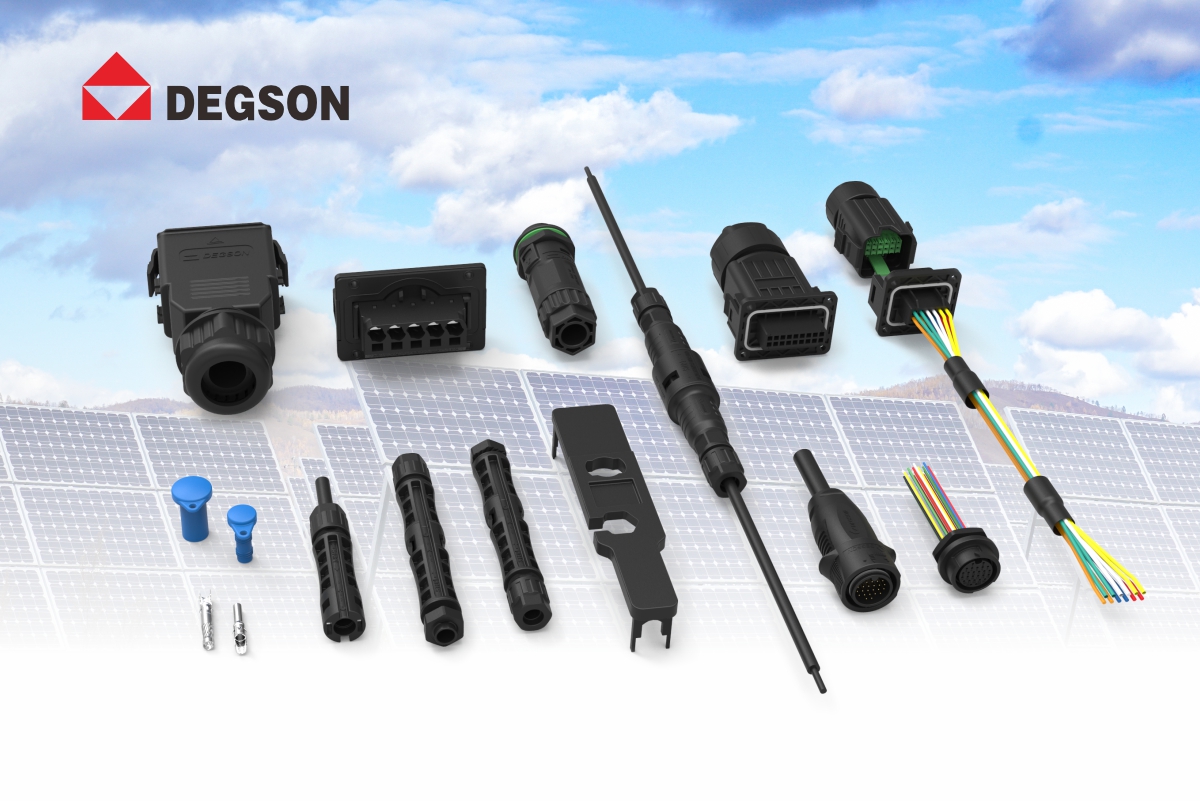
Recommended Product: PV-DC series DC connectors with fuse protection, supporting crimping and welding, compatible with 6–14mm² PV cables for PV strings of all power levels.
2. Inverter Output Terminals to Power Grid / Energy Storage Systems (AC Side)
This circuit transmits high power and large current, carrying AC voltage of single-phase 220V, three-phase 380V and above. Some installations are semi-outdoor or fully outdoor, requiring connectors with high current capacity, aging resistance and EMI shielding.
Selection Recommendations
• Rated current ≥ 1.2 times the maximum operating current of equipment to reserve sufficient safety margin;
• Low-impedance contact structure with enlarged effective contact area to reduce heat loss;
• Minimum protection rating IP65, upgraded to IP67 for fully outdoor scenarios to adapt to humid and dusty environments;
• Dual-layer EMI shielding structure (aluminum foil + tinned copper braid) with shielding efficiency ≥60dB to isolate high-frequency interference generated by inverters;
• Weather-resistant UV-proof housing materials to extend service life outdoors.
3. Internal Signal Connections of Inverters (Control Side)
The compact cabinet interior is densely packed with components for signal transmission between sensors, controllers and display panels. Core requirements include miniaturization, anti-interference and wide compatibility.
Selection Recommendations
• Miniature wire-to-board connectors with 4.20mm pitch, compact structure fixed with copper/plastic posts to standardize wiring routing;
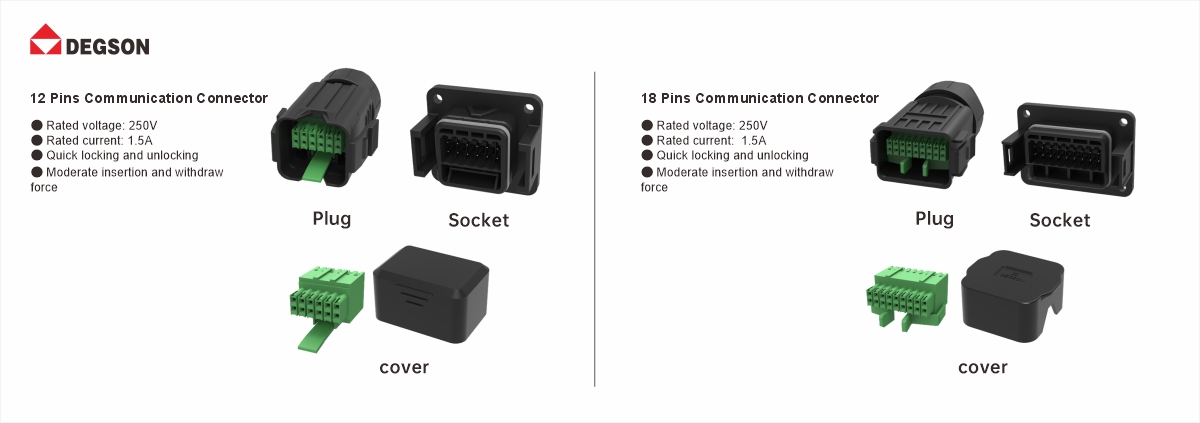
• M12 circular connectors for signal transmission, IP67 rated to resist condensation inside cabinets, with threaded locking to prevent loosening from vibration;
• Custom equal-length differential cables with length difference ≤5mm, ensuring bit error rate ≤10⁻⁹;
• Color-coded interfaces with customized marking sleeves indicating functions and parameters for easy later maintenance.
02 Installation & Protection Specifications
1. DC Side (PV Strings to Inverter Input)
For fully outdoor 1500V high-voltage DC applications, uniformly adopt IP67+ PV-DC connectors with fuses. Clean mating surfaces before assembly, inspect fluororubber seals for damage, fully mate and lock connectors. Do not omit seals or force misaligned insertion.
2. AC Side (Inverter Output to Grid / Energy Storage)
Select IP65 for semi-outdoor and indoor use, IP67 for fully outdoor environments according to installation conditions. For high-power three-phase circuits, size connectors with 1.2× current margin. Ensure complete grounding of shielding layers to avoid electromagnetic crosstalk.
3. Internal Control Signal Circuits
Separate high-power and low-signal wiring inside cabinets. Fully tighten threads of M12 signal connectors. Supply differential cables in fixed custom lengths without arbitrary on-site cutting to guarantee stable transmission timing.
Connector Solutions for Energy Storage Systems
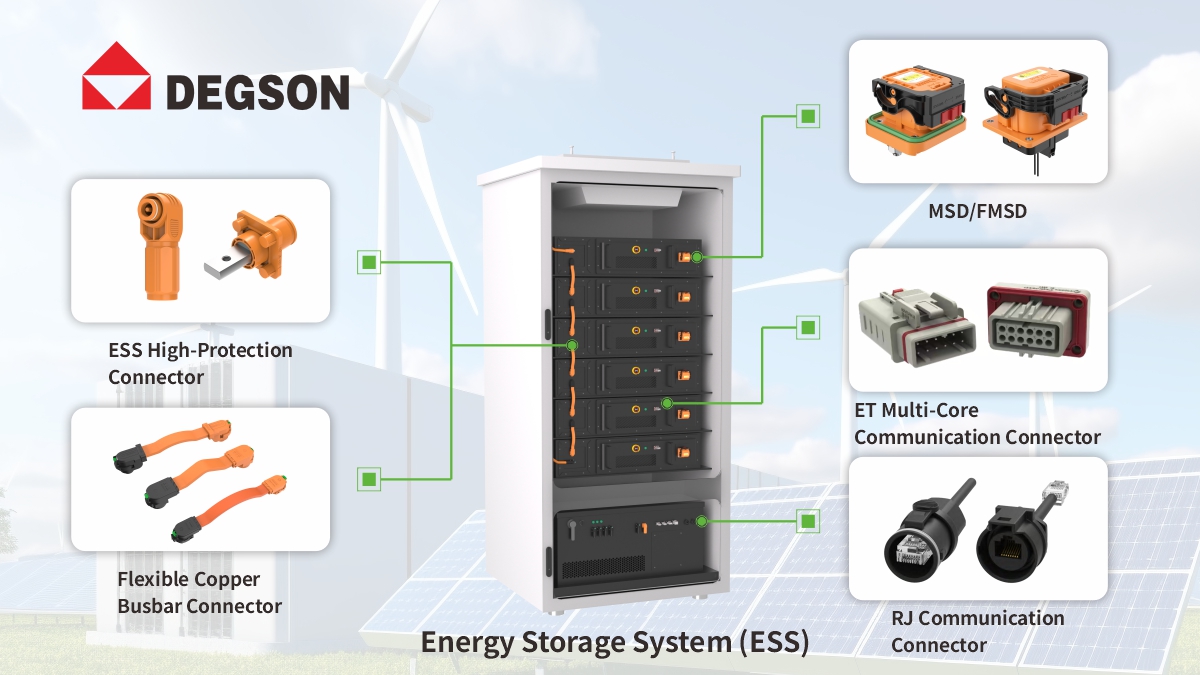
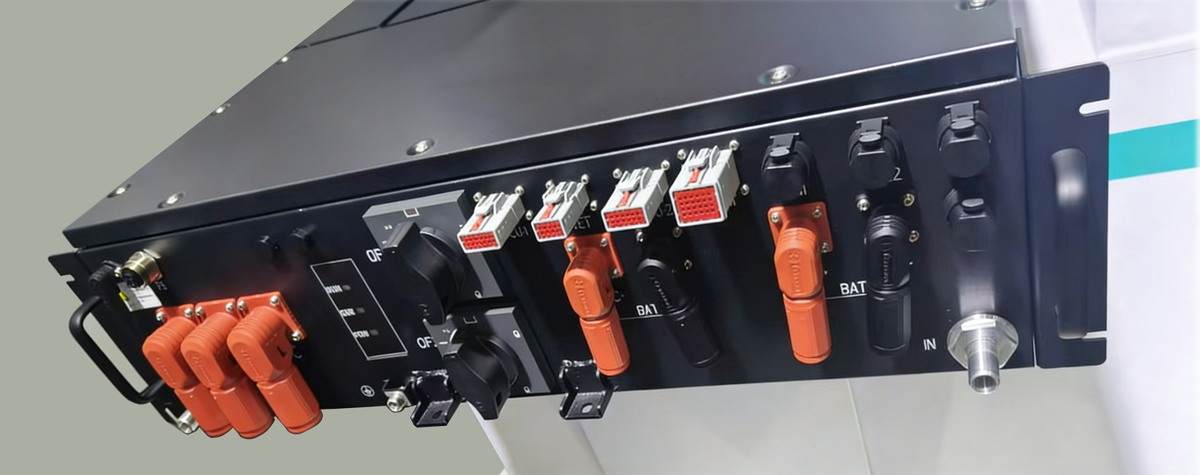
Covering residential, commercial & industrial and mobile energy storage, energy storage systems realize power storage and bidirectional charge-discharge conversion. Connectors are applied in four core scenarios: interconnection between battery clusters, battery clusters to PCS, energy storage systems to inverters/grid, and BMS/EMS signal transmission. Key demands include high-current transmission, high-voltage protection, long service life and intelligent communication compatibility.
01 Core Application Scenarios & Connector Selection
1. Interconnection Between Battery Clusters (DC Side)
The core power link of energy storage systems, carrying large current of 50–450A and high voltage of 1500V DC and above, mostly installed inside sealed energy storage cabinets. Connectors must deliver high current capacity, low thermal loss and flame & explosion resistance.
Selection Recommendations
• DEGSON dedicated energy storage DC connectors by power grade: ESP250A series (150A250A), ESP12 series (350A400A);
• Rated voltage ≥1500V DC, dielectric withstand voltage ≥6500V for ample safety margin;
• Contact resistance ≤1mΩ with integrated heat dissipation structure to suppress temperature rise under high current;
• UL94 V-0 flame-retardant housing, foolproof & reverse-connection prevention design, mating cycles ≥500 times for long-term reliable operation.
2. Connection Between Energy Storage Systems and Inverters / Power Grid
Supports bidirectional current flow for charge and discharge, with operating conditions similar to the AC side of PV inverters.
Selection Recommendations
• Bidirectional current-carrying AC connectors matching voltage and current specifications of inverters and grid, capable of frequent charge-discharge switching without aggravated contact loss;
• IP65 for semi-outdoor, IP67 for fully outdoor installation, with UV and salt spray resistance;
• Certified by TUV, UL and RoHS to meet grid access standards in Europe, North America and other regions;
• Built-in insulation protection to prevent high-voltage electric shock hazards.
3. BMS / EMS System Signal Connections
Collect battery voltage, current, temperature and overall system operating data to support intelligent dispatching of energy storage systems, requiring high precision and strong anti-interference performance.
Selection Recommendations
• High-precision BMS signal connectors: high-temperature resistant, anti-interference multi-channel acquisition interfaces for real-time cell status monitoring and extended battery service life;
• Multi-protocol compatible intelligent EMS communication connectors: bidirectional high-speed transmission, remote diagnosis, built-in encryption chips supporting millisecond-level dispatching of power stations;
• Double-layer shielding on signal connectors with shielding efficiency ≥60dB to block electromagnetic interference from PCS and inverters;
• Miniature modular design adapting to compact cabinet layout, supporting customized specifications for different BMS/EMS systems.
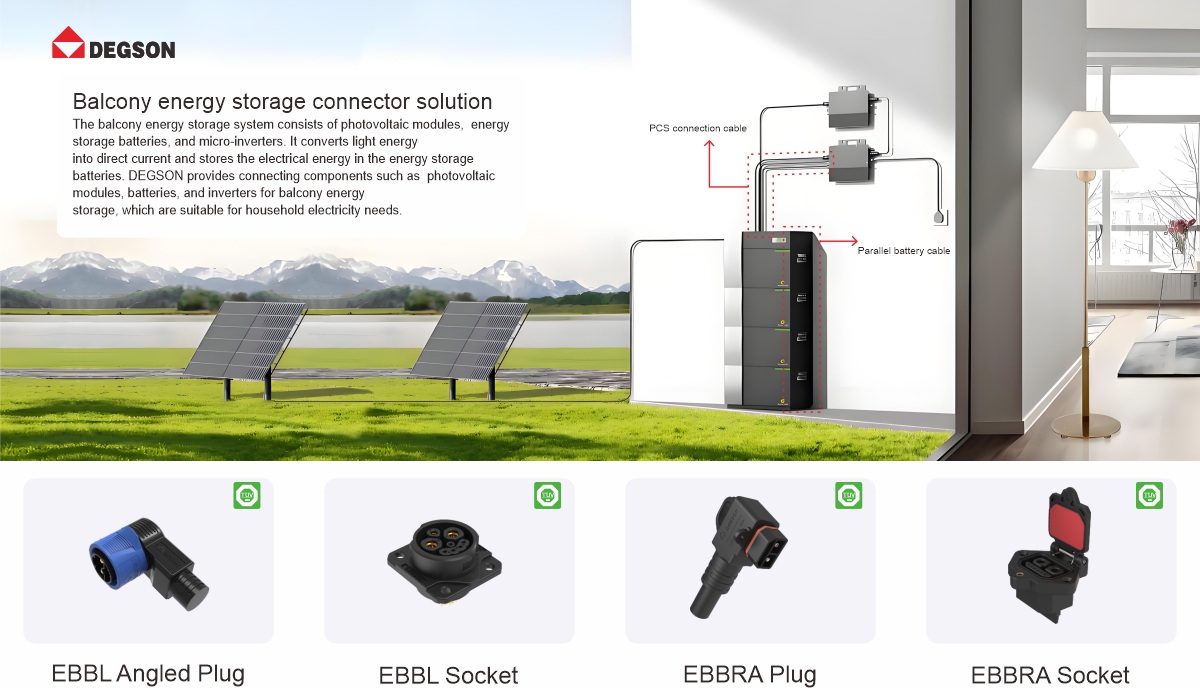
4. Residential & Mobile Energy Storage Systems
Features: compact size, moderate power (5–20kW), flexible installation (indoor, balcony, outdoor), prioritizing safety, miniaturization and easy maintenance.
Matching Solution
• EBBL series miniature connectors (50–120A), integrated power & signal design to save cabinet space;
• IP67 dust and water resistance to block dust and moisture in household environments;
• Tool-free quick-plug design with foolproof and touch-proof protection for easy installation and maintenance;
• Clearly marked interfaces for easy identification without professional technicians;
• RoHS-compliant eco-friendly materials to guarantee household environmental safety.
02 Core Advantages & Support of DEGSON PV & Energy Storage Solutions
1. Five Core Advantages
1. Full-Scenario Compatibility
Complete coverage of PV inverters, residential / C&I / mobile energy storage. Customized selection and assembly solutions for mainstream 1500V high-voltage and high-current systems.
2. Safety & Reliability
All products certified by TUV, UL, RoHS. Equipped with high protection, reverse-insertion prevention, short-circuit protection and flame/explosion resistance. Low contact resistance and wide temperature & weather resistance drastically reduce fault risks.
3. High Efficiency & Energy Saving
Low-impedance contact structure minimizes power transmission loss and improves overall charge-discharge efficiency of PV and energy storage systems. Modular integrated design reduces transition nodes to further cut energy consumption.
4. Convenient Maintenance
Quick-plug structure, clear marking and visible status indicators simplify on-site construction and inspection. Standardized troubleshooting procedures shorten downtime and cut labor costs.
5. Long Service Life
Premium raw materials and precision manufacturing deliver mating cycles ≥500 times. Anti-aging and anti-corrosion performance supports a design lifespan of over 10 years for outdoor and cabinet applications, lowering replacement costs in later stages.
2. Quality & Service Support
• Quality Assurance: Dedicated ESP/ESS energy storage series and PV-DC PV series are manufactured strictly in accordance with international standards with full-process quality traceability for consistent batch performance.
• Technical Support: Free selection calculation and system optimization; rapid custom development of non-standard connectors; standardized installation manuals and on-site technical training.
• After-Sales Service: Fast response mechanism for closed-loop handling of on-site faults; short lead time for spare parts and maintenance to ensure continuous power station operation.
03 Solution Summary & Future Optimization Roadmap
Targeting various pain points of connectors in PV inverter and energy storage systems, this comprehensive implementable solution covers selection, installation, protection and maintenance, balancing safety, reliability, energy efficiency and total cost to match the large-scale development demand of clean energy.
Following the iteration of PV and energy storage technologies, DEGSON will continuously upgrade the solution in the following directions:
1. Develop connectors rated above 2000V to fit next-generation large-capacity energy storage systems;
2. Improve integration by embedding sensing and monitoring modules to realize remote online diagnosis and intelligent O&M;
3. Adopt new lightweight composite materials to reduce product weight and simplify field installation;
4. Further optimize ultra-low impedance contact structures to cut transmission loss and drive high-quality development of the PV and energy storage industry.


